
Are you finally ready to make the jump to 4K? Right now, you can invest in a 50-inch Vizio E50x-E1 4K TV at Walmart, and . The folks over at have also found great sales on VR headsets Google Home Minis, Amazon Echo Dots, and much more. Featured Deals i5 12.3-inch 2400×1600 Touch Laptop with 8GB RAM, 128GB SSD for $749 at Amazon (List price: $999). for $58 (SCROLL DOWN TO “Buy Together and Save” and click Add to Cart) at Walmart (List price: $99.98). for $258.95 at Walmart (List price: $299.99).
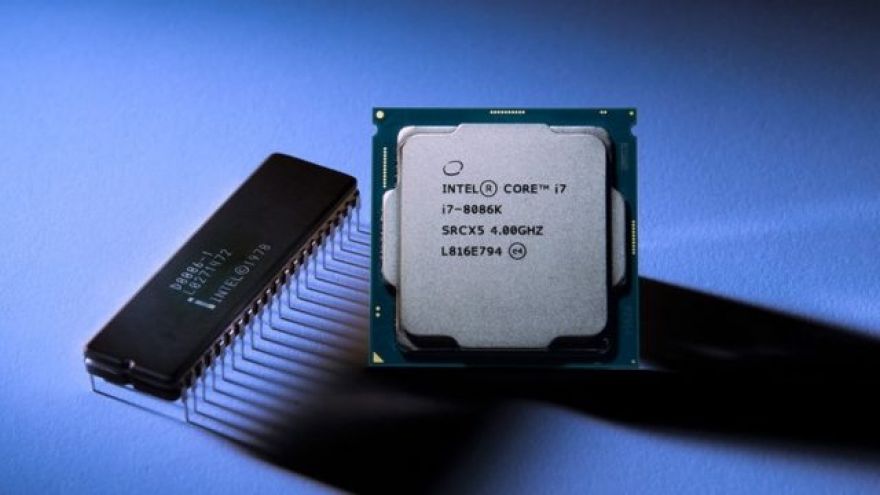
As rumored , Intel has announced a new, limited edition Coffee Lake CPU: The Core i7-8086K. This new chip will have a 4GHz base clock and 5GHz boost, with six cores, 12 threads, and the same iGPU turbo clock as the rest of the 8th Generation Core i7 family (1.2GHz). The new core isn’t just a top-end SKU, however — it’s a limited edition CPU, with just 50,000 parts planned at this point. Intel isn’t revealing all of the turbo frequencies, but we’ve seen speculation online that the chip will have a 4.6GHz all-core turbo frequency. If true, this would work out to a 300MHz clock jump across the board compared with the Core i7-8700K’s 3.7GHz base, 4.3GHz all-core turbo, and 4.7GHz single-core boost.
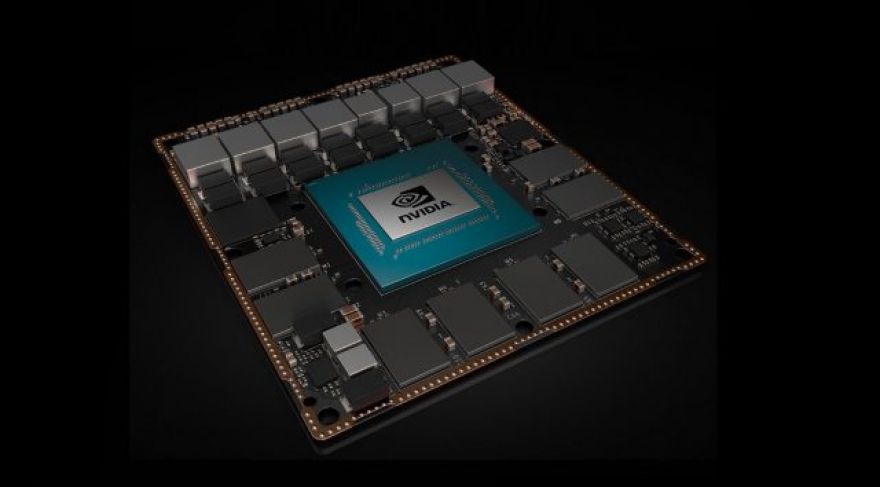
This week, Nvidia unveiled its new Jetson Xavier platform, a new computation board with significantly higher performance than the previous models from Team Green. Up until now, the company has offered the Jetson TK1 (2014), TX1 (2015) and Jetson TX2 (2017) as edge compute devices for AI workloads. The K1 was built around Kepler, the X1 used Maxwell, X2 is based on Pascal, and the Xavier is, as one might expect, based on Volta. The new board packs 512 GPU cores (TX1 and TX2 were both 256-core solutions) with an eight-core ARM CPU of unspecified vintage. Nvidia has not clarified if this is a further evolution and refinement of its Denver CPU core, or if the company is using a bog-standard ARM Cortex design.
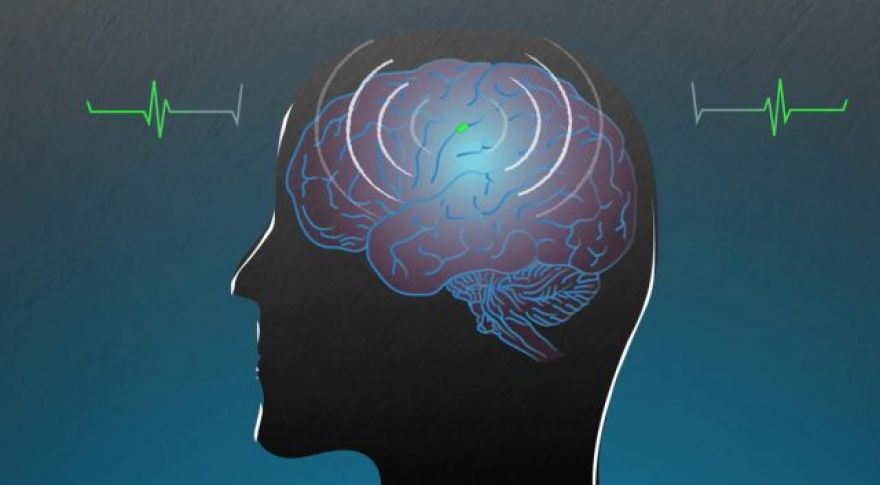
Technology is constantly becoming more powerful and compact. What used to require a room full of equipment can now work with devices that fit in the palm of your hand. The same is true of medical devices, which are increasingly designed to be implanted in the human body. However, powering such devices is a challenge. Researchers from MIT have (IVN) that could allow powerful medical devices to operate inside the body while getting power from radio waves. Implantable device functionality is limited by the amount of power available to it, and that’s currently not very much. Since it’s not feasible to install a charging port in the patient, implants need to sip battery power for a long time.
If you were hoping for a surprise GeForce launch or unveil at E3 or Computex this year, Nvidia CEO Jen-Hsun Huang has some bad news. While the company is aggressively moving forward with new embedded hardware, including Jetson Xavier, a new, robotics-focused development platform with a Volta Tensor Core GPU, an eight-core ARMv8.2 CPU of undetermined vintage, and what Nvidia calls a “Vision Accelerator” (a 7-way VLIW processor), that platform is intended strictly for robotics development and isn’t coming to consumer platforms. And as for a new GPU, well, that’s not in the immediate cards either. Nvidia’s new Volta-powered Jetson Xavier.

Today, in a major first for any ARM vendor, Qualcomm announced the Snapdragon 850, with a focus explicitly on PC performance rather than smartphone or tablet performance that one would typically expect. This focus sets the Snapdragon 850 apart from devices like the Snapdragon 835. While that SoC has been used in the first round of Always Connected PCs to use ARM hardware, it was still primarily a phone product. The Snapdragon 850, in contrast, is meant to be used for PCs first. Let’s talk about the major differences. Unlike the Snapdragon 835 to 845 shift, there’s no fundamental change to the underlying CPU architecture or capability.
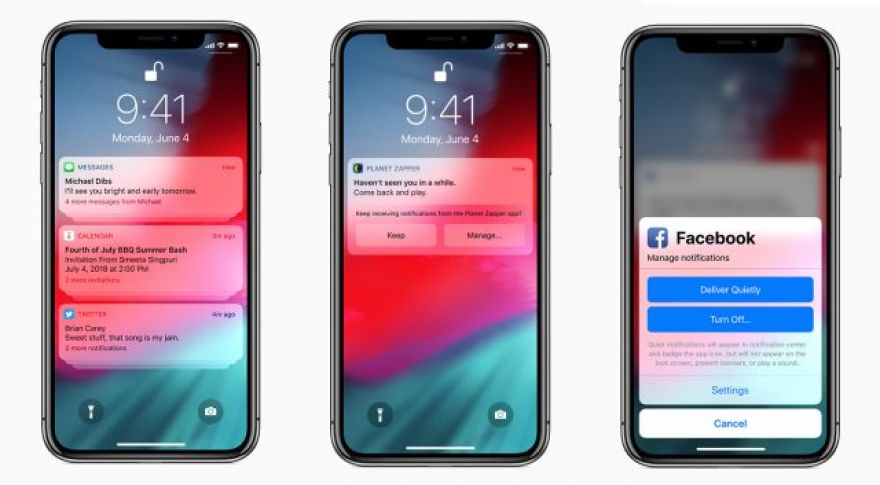
Apple didn’t announce new computers at WWDC this year, but it did talk a lot about software on both desktops and mobile. The company is preparing to push out a that will address performance issues and long-standing problems with iOS notifications. Apple is also jumping on the digital wellness bandwagon with new screen time management tools. Oh, and animoji are getting an overhaul with more customization. Clearly, that’s the headlining feature. Apple has suffered from nagging issues with older iPhones slowing down on new firmware updates. This was, in part, due to the performance throttling Apple instituted .
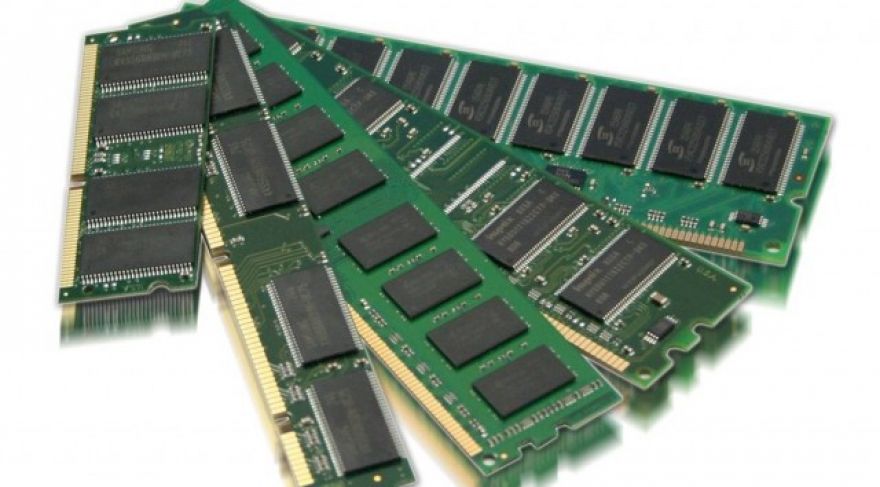
The Chinese government has opened a formal investigation into the pricing strategies of Micron, Samsung, and SK Hynix, after conducting significant investigations into the alleged price-fixing carried out by those firms for the past several years. This is apparently the culmination of at least several months of work, and doesn’t appear to be linked to any larger trade issues being discussed between the United States and China or between China and other nations. Of course, it’s impossible to claim that international trade issues have no impact on how events evolve, but China has been investigating allegations of DRAM price fixing since at least last fall, and in the United States have recently been filed on the topic as well.

Artificial intelligence researchers have thus far attempted to make well-rounded algorithms that can be helpful to humanity. However, a team from MIT has undertaken a project to do the exact opposite. Researchers from the MIT Media Lab have trained an AI to be a psychopath by only exposing it to images of violence and death. It’s like a Skinner Box of horror for the AI, which the team has named “Norman” after movie psychopath Norman Bates. Predictably, AI. Norman started off with the same potential as any other — as you feed it data, it becomes able to discern similar patterns it encounters.