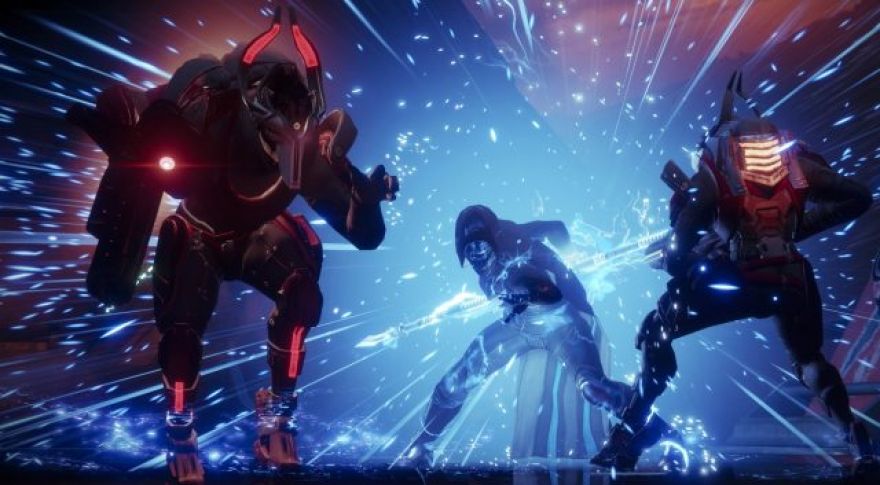
Bungie and Activision have decided to go their separate ways, with Bungie retaining control of the crown jewel in its own empire (and the publishing rights). “We have enjoyed a successful eight-year run and would like to thank Activision for their partnership on Destiny,” the company writes. “Looking ahead, we’re excited to announce plans for Activision to transfer publishing rights for Destiny to Bungie. With our remarkable Destiny community, we are ready to publish on our own, while Activision will increase their focus on owned IP projects.” Activision apparently required a commitment to an annual launch cycle for the game, which in turn forced Bungie into development constraints that the company apparently wasn’t happy about, to Kotaku.

When the GOP passed tax reform in 2017, the party justified its corporate tax cuts with claims that the reductions would boost US employment, wages, and the overall economy. The FCC similarly justified its repeal of net neutrality by arguing that the onerous regulation of wireless and wireline service was hampering innovation, imposing ruinous costs, and generally harming the telcos, ISPs, and cellular service providers in the United States. Thus far, the corporations Ajit Pai and the Republican Party bent over backward to help haven’t exactly been returning the favor. GM plans to close plants and fire 14,000 people.
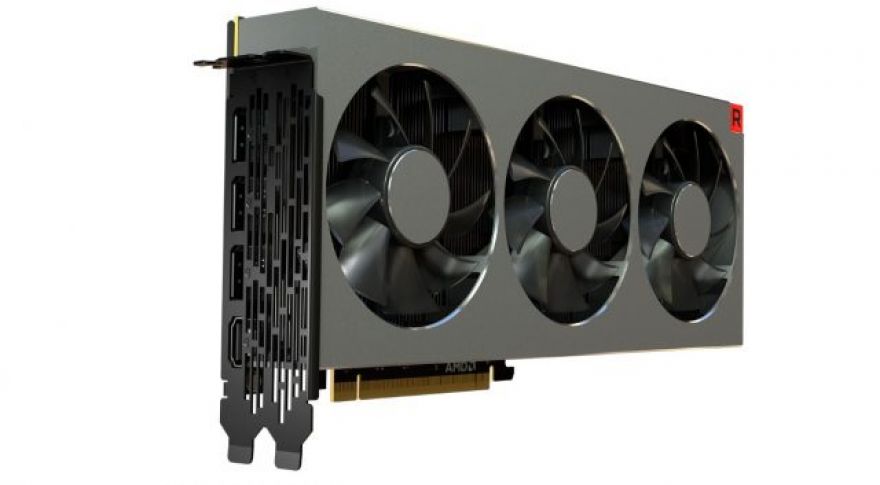
AMD’s Radeon VII announcement earlier this week came as something of a surprise. The company has previously discussed its Radeon Instinct family of hardware and disclosed stats on the MI50 and MI60 at its Next Horizons event but gave no hint that it intended to launch a new high-end Vega GPU. Now the company has shared a bit more information on the card, including its own performance data. Radeon VII is based on Vega 20, the 7nm die shrink built at TSMC. Die size is 331mm sq at 13.2B transistors, compared with 487mm sq and 12.5B transistors for Vega 64.

Need a quad-core laptop that won’t put a huge dent in your savings? Right now, you can get a 15.6-inch Inspiron 15 5000 with a Ryzen 5 2500U processor and a full HD display for 30 percent off. Plus, get discounts on a Kindle Unlimited subscription, 2018 iPads, customized shelving, and more courtesy of our partners at … Featured Deals AMD Ryzen 5 2500U Quad-Core 15.6-inch 1920×1080 Laptop with Radeon Vega 8 for $379 at Walmart (List price: $549). Ends 1/11: (New Subscribers Only) for $0.99 at Amazon (List price: $29.97). Ends 1/11: for $80.31 at Amazon (List price: $119.99).

There’s never been much love lost between AMD and Nvidia when it comes to GPUs, but Nvidia CEO Jen-Hsun Huang’s recent comments about AMD’s are rather cutting. Huang blasted the GPU as “underwhelming,” according to , noting “The performance is lousy and there’s nothing new…[There’s] no ray tracing, no AI. It’s 7nm with HBM memory that barely keeps up with a 2080. And if we turn on DLSS we’ll crush it. And if we turn on ray tracing we’ll crush it.” As for FreeSync, according to Jen-Hsun, it’s not even in competition with AMD. “We never competed,” Huang told PCWorld concerning FreeSync support.
Microsoft has decided that because Windows Update can’t properly check to see if you have enough hard drive space available before it applies updates, the solution is to simply steal more of the user’s hard drive space and reserve it for OS updates. Starting with Windows 1803, Microsoft began warning users that if they didn’t manually clear data before installing the OS, it might fail to reboot properly post-update. The reason? According to the company, “Windows Update does not check systems for adequate space requirements before it initializes.” The manual solution to this problem is for the end user to clear temporary files and “maintain awareness” of available storage.
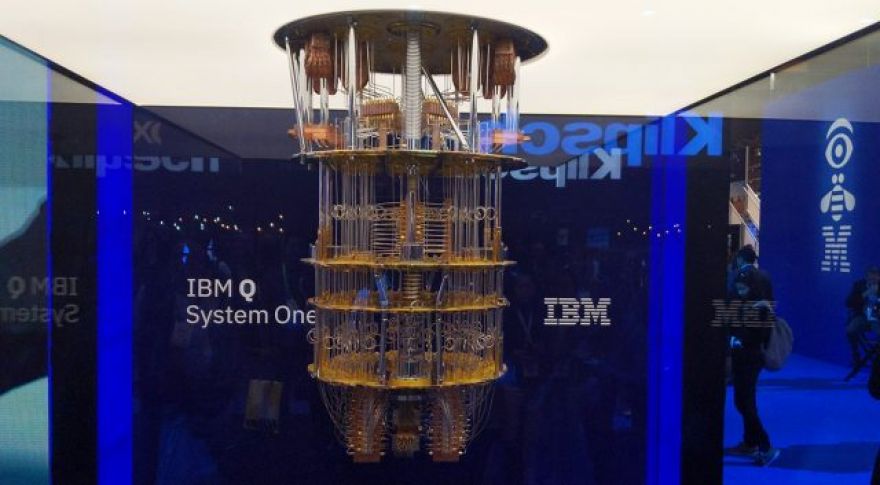
LAS VEGAS — Quantum computing still seems like it comes from the pages of a science fiction novel, but it is slowly getting closer to being a commercial reality. At CES 2019, IBM Research has made what it hopes is a big step in that direction with what it calls the “first fully-integrated commercial quantum computer,” the Q System One. Existing quantum computers are confined to R&D labs, while the Q System One includes both the electronics and cooling components needed in a single package that was developed in concert with leading industrial designers. An extraordinary amount of cooling is needed to reduce qubit errors and reduce the need for additional qubits to be used for error correction.
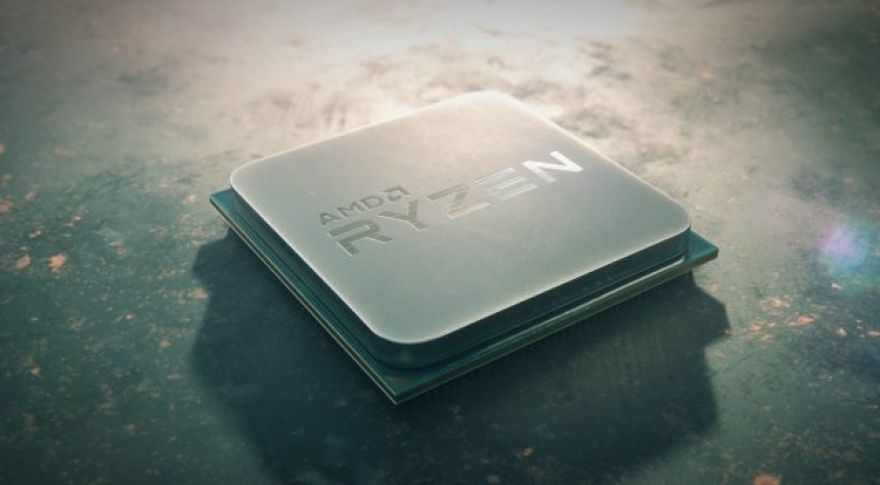
At CES 2019, AMD announced that its third-generation Ryzen CPU core and accompanying Epyc will both be available from mid-2019 forward. AMD showed off an eight-core version of its Ryzen CPU and confirmed that it will use a chiplet design, with a 14nm GlobalFoundries I/O die and a 7nm CPU chiplet. We weren’t sure if AMD would opt for a chiplet design at 7nm or continue with an integrated core and theorized that it might make more sense for AMD to continue to use a unified architecture. Instead, it’ll be chiplets down the stack, though the company isn’t re-using Epyc 14nm die as some had theorized.
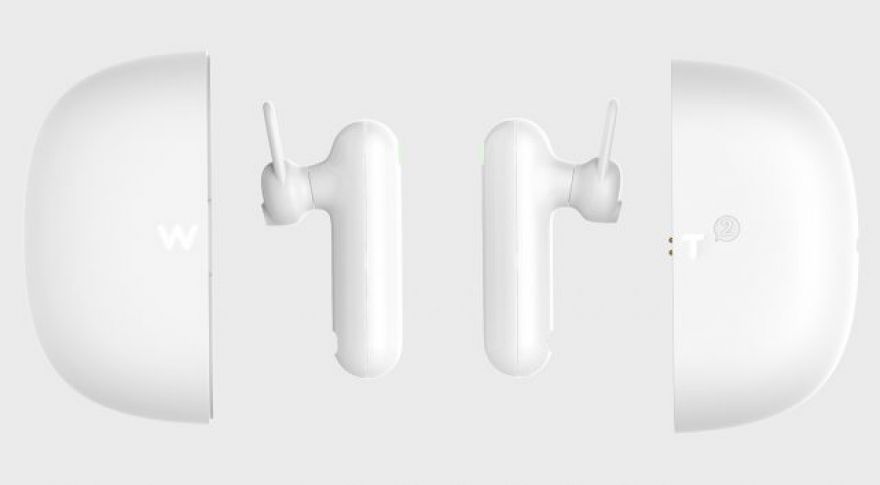
LAS VEGAS — There are some experiences that make you feel like you’re in the future. Out of the hundreds of products I look at, and the dozens I demo, at CES every year, a few deliver on that score. This year one is the translating earbuds from TimeKettle and Waverly Laps did the job. While not as seamless as the universal translators of science fiction, they do let you say something into one earbud and have the person wearing the other one hear it in their language. TimeKettle, launching its WT2 Plus translating earbuds here at CES, is not the first set of earbuds tied to a translation system.