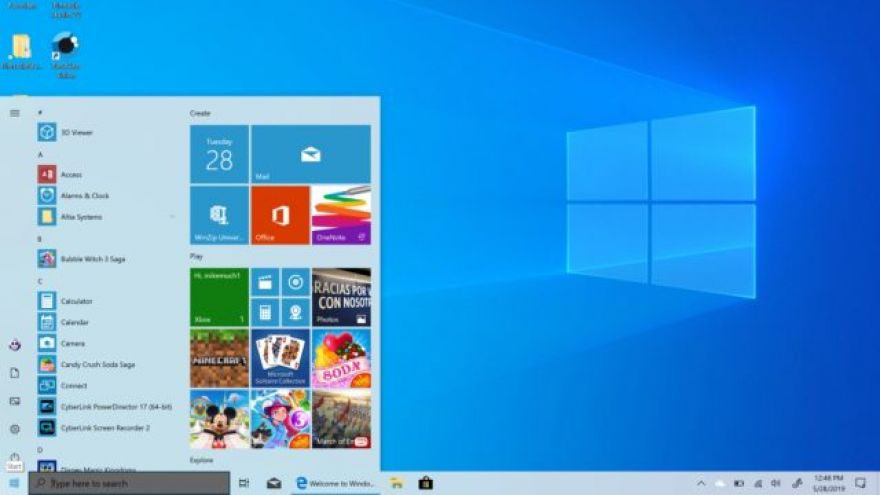
When Microsoft introduced Windows 10 2004 earlier this year, it shipped an errata that may have shortened your SSD’s longevity depending on how often you reboot your machine. The good news is that a fix is on the way and that the problem shouldn’t have caused too many problems between now and when the update dropped, unless you reboot your PC (and pollute your SSD) much, much more than your typical Windows user. First, here’s the description of the bug itself: Windows 10 2004 shipped with a problem in which the system stopped recording the time since the SSD had last been defragged.
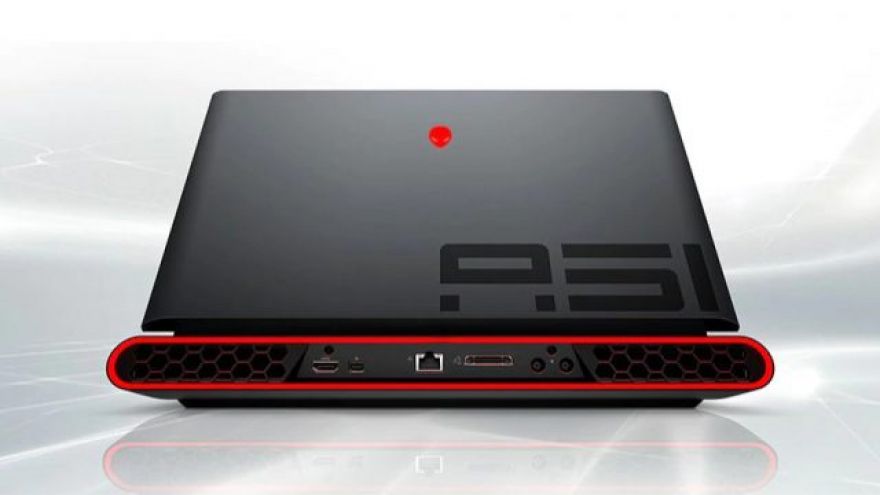
Today you can take advantage of an enormous discount to save $1,675 on your purchase of an immensely powerful gaming laptop from Dell. In addition to being a highly capable gaming machine, this system also has plenty of fast storage space with two SSDs in RAID 0 and a secondary 1TB SSHD. Dell’s Area-51M R1 is an immensely powerful gaming laptop that comes loaded with an Intel Core i9 processor and an Nvidia GeForce RTX 2070 graphics chip. The system should be more than capable of running today’s newest gaming titles with high graphics settings.
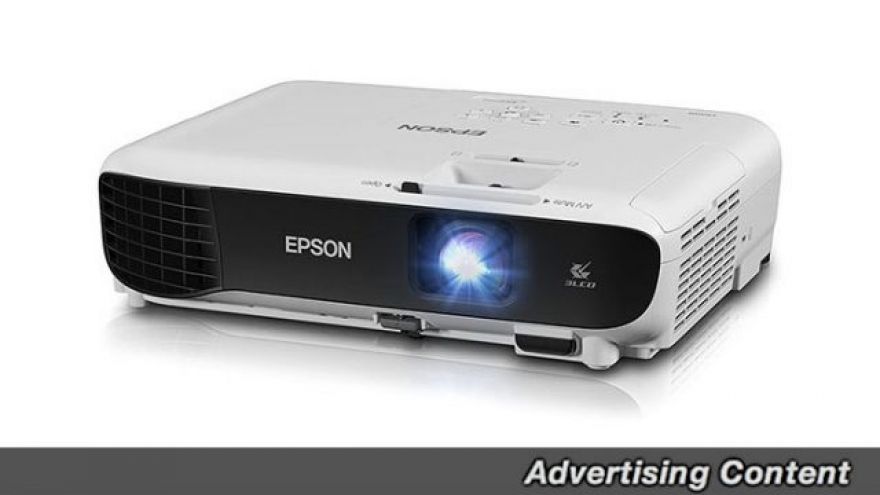
If you’re going to give a presentation, telling everyone in the room to come huddle around your laptop just isn’t going to cut it. If you’re going to present, you need equipment to relay your information that’s at least on par with the message you’re trying to deliver. It would also be a huge plus that equipment didn’t require a handcart to transport it from place to place either. checks all the important boxes you’d expect from a solid professional grade projector from a quality hardware maker like Epson. Right now, you can also save $20 off the price of a certified renewed EX3260 and .
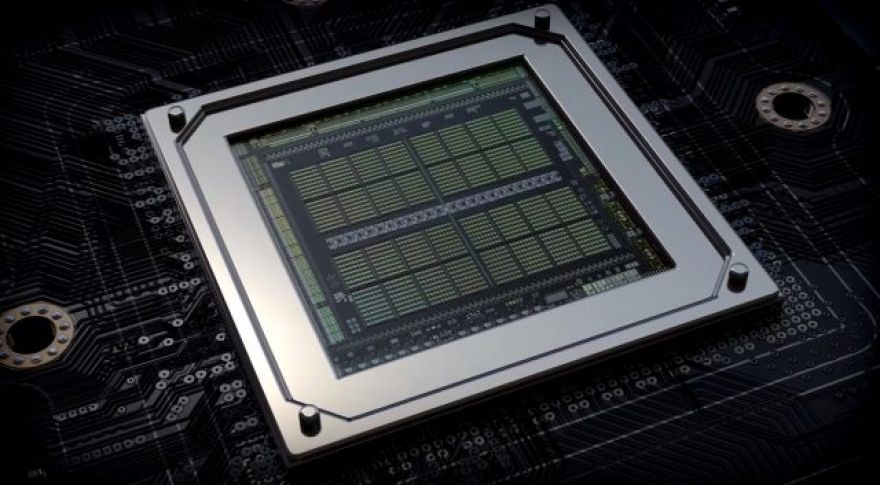
It’s been a while since we needed a new graphics card power connector. Both AMD and Nvidia have typically made do with pairs of 6-pin and 8-pin connectors in various configurations. This year, Nvidia is introducing a change, with a new 12-pin connector for Ampere. First, good news: You aren’t going to have to rush out and buy new connectors. According to Nvidia, the 12-pin will be compatible with 8-pin connectors. This is pretty common. Two Molex connectors could be connected to create a single 6-pin PCIe back in the day, and two 6-pin cables can be combined in a converter to create a single 8-pin.
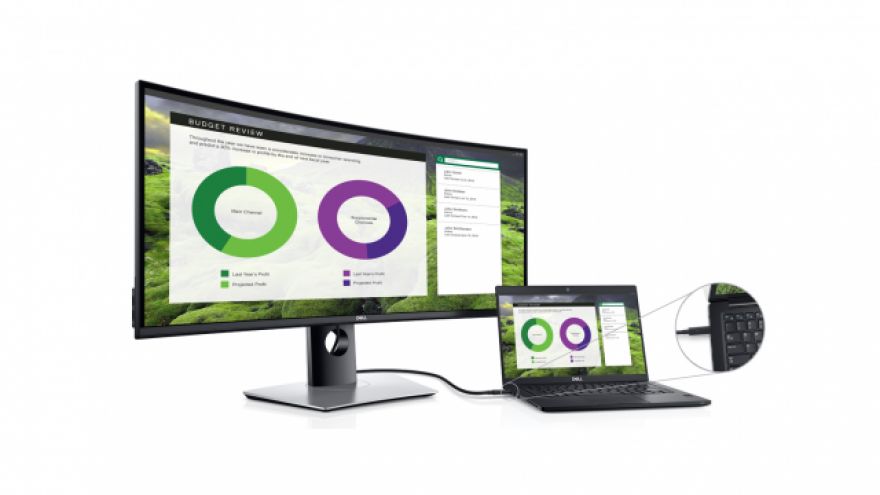
Today you can save over $300 dollars on one of Dell’s high-quality UltraSharp displays. This particular model has a large 34-inch curved panel and supports a resolution of 3,440×1,440. With a 1900R screen curvature and a resolution of 3440×1440, this 34-inch display can give you plenty of space to work and an immersive gaming experience for when work is finished. It also features support for 99 percent of the sRGB color spectrum, which is helpful for photo and video editing as well as just making colors look better in general. Get this display from Dell marked down from $959.99 to just $647.99 with promo code STAND4SMALL.

Spotting isn’t as simple as pointing a telescope at the sky and picking out the planet-shaped things. The worlds orbiting distant stars are too dim and tiny for that, but we can detect them with the help of planet-hunting satellites like TESS and the dearly departed Kepler. These missions produce a lot of data that someone needs to evaluate, and researchers from the University of Warwick think they can speed it up with AI. To illustrate this, the team has developed a machine learning algorithm that just confirmed 50 exoplanets in observational data. Astronomers have two methods at their disposal to detect exoplanets.
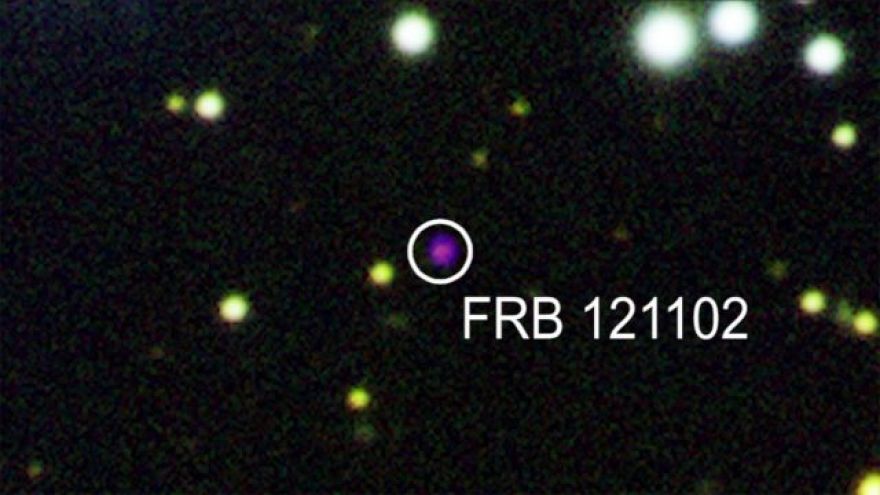
Our old friend FRB 121102 is back, and right on time. Earlier this year, astronomers identified a distinct 157-day cycle in the activity of FRB 121102, one of many so-called “fast radio bursts” emanating from deep space. The mysterious signal has , potentially confirming the from the University of Manchester. If the cycle holds, there’s hope we might finally know what FRBs are in the not-too-distant future. Fast radio bursts are invisible to the human eye, and each pulse only lasts a few milliseconds. However, they release enough energy during that fraction of a second to outshine entire galaxies.

As school districts spin up with various remote distance and in-classroom learning plans to combat COVID-19, they’ve needed far more computers than typical for the back-to-school season. This is causing problems because — again, thanks to COVID-19 — the number of computers currently available for purchase is much lower than normal. A number of factors are feeding the issue. Slower port inspections mean longer stock cycles. The United States Postal Service has suffered unprecedented slowdowns. Chinese factory production is pushing back up to pre-pandemic levels, but there are supply chain weaknesses that haven’t been fully addressed. The ongoing US-China trade war isn’t helping anything move faster, either.

Credit: Dong Wenjie/Getty Images The history of VR/AR displays is one of tradeoffs. Most of the market is dominated by single-plane models, which force the viewer to un-naturally focus on a single distance no matter how far objects in the scene should be. Waveguide-based multi-focal displays, like those by Magic Leap, are expensive and have a limited field of view. So there has been increasing interest in various alternatives. One of the most promising areas of research is holographic displays, which promise an easy-on-the-eye experience with realistic results. Unfortunately, generating images for holographic displays is a complicated and time-consuming process.