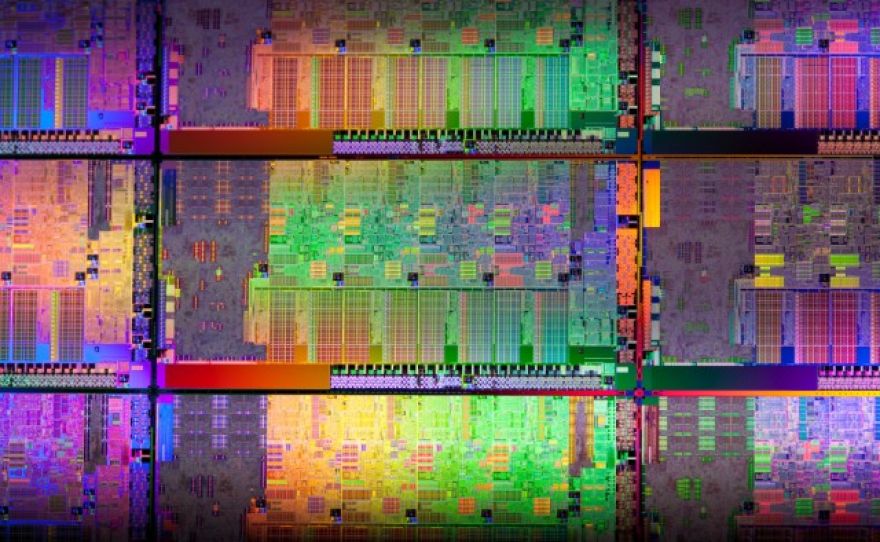
With a new Apple security flaw in the news, it’s a good time to revisit the question of what speculative execution is and how it works. This topic received a great deal of discussion a few years ago when Spectre and Meltdown were frequently in the news and new side-channel attacks were popping up every few months. Speculative execution is a technique used to increase the performance of all modern microprocessors to one degree or another, including chips built or designed by AMD, ARM, IBM, and Intel. The modern CPU cores that don’t use speculative execution are all intended for ultra-low power environments or minimal processing tasks.

The Supreme Court has ruled that Google’s use of Java APIs owned by Oracle is fair use. The lawsuit against Google, which began in August 2010, is now finally over. Since it’s been banging around for over a decade, we’ll recap the major developments: In 2010, Oracle sued Google claiming that the latter had infringed on Oracle’s Java copyright by copying some 37 Java APIs (Application Programming Interfaces) totaling ~11,500 lines of code without permission. Previously, APIs had been thought to be exempt from copyright claims because they constituted functional elements of code rather than expressive statements. You can’t copyright a merely functional product or document.

Today you can pick up a new Apple Watch Series 6 smartwatch with a $80 discount. 40mm GPS Smartwatch for $319.99 from Amazon (List price $399.00) Intel Core i5-10400 Gaming Desktop w/ Nvidia GeForce RTX 2060 GPU, 16GB DDR4 RAM, 256GB NVMe SSD and 1TB HDD for $799.99 from Dell with promo code DTXPSAFF45 (List price $1,439.99) for $379.99 from Amazon with promo code ROCKS6PURE (List price $599.99) 27-Inch 1080p 75Hz IPS Monitor for $134.99 from Dell with promo code EXTRA10 (List price $269.99) Intel Core i7-10750H 15.6-Inch 144Hz 1080p Gaming Laptop w/ Nvidia GeForce RTX 2070 Max-Q GPU, 16GB RAM and 512GB SSD for $1,499.99 from Amazon (List price $1,999.99) External SSD for $139.99 from Amazon (List price $199.99)
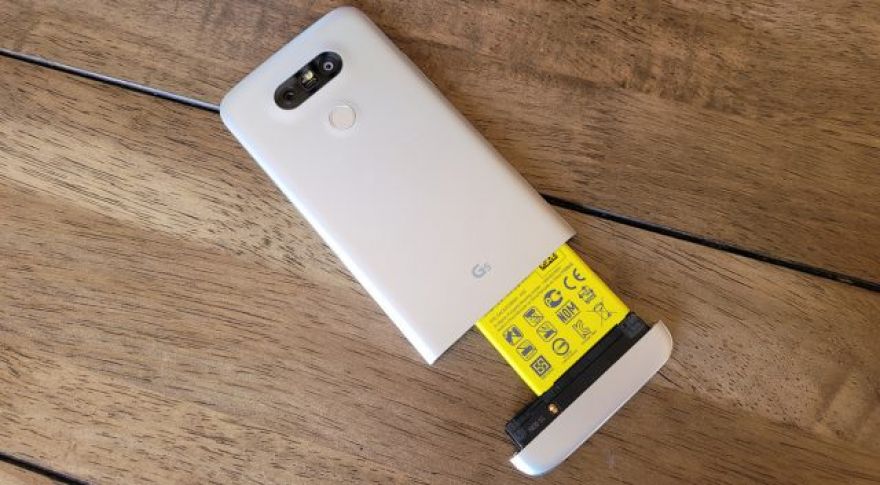
It’s the end of the line for LG Mobile. As , the consumer electronics giant has , focusing instead on growing industries such as electric vehicles, IoT, and core 6G network technologies. It will take a few months to spin down its smartphone operations, but LG expects to complete that this summer. This will leave a small opening for other companies to pick up market share, but LG’s reach was so reduced in recent years that it’s no great prize. In fact, LG’s releases in the past few years have been uniquely scattershot and ineffective. In the early years of the modern smartphone revolution, LG was a major player.

Mars is shaking, and we’d never know were it not for the trailblazing InSight lander. This mission touched down on the red planet in 2018, making history by deploying the first and only seismometer on another planet. NASA has been listening for rumbles ever since, and . NASA reports that InSight detected two strong quakes, originating in a region with enormous surface fissures called Cerberus Fossae. The quakes had magnitudes of 3.3 and 3.1, similar to a pair of previous quakes from the same area of the planet that clocked in at 3.6 and 3.5. InSight has recorded hundreds of seismic events on Mars with its Seismic Experiment for Interior Structure (SEIS) package, but these are the most significant.

Google was roundly criticized last year for its decision to skip Qualcomm’s high-end Snapdragon 865 chip. Instead, Google’s Pixel 5 sported the cheaper 765 system-on-a-chip (SoC). The cheaper flagship Pixel was a risk, and it didn’t pay off. The Pixel 6, however, could come out swinging. According to leaked documents by 9to5Google, the sixth-gen Pixel phones could be the first to have Google’s long-rumored custom ARM chips, which are allegedly codenamed Whitechapel. Google has been building expertise to develop its own chips for several years, but the company hasn’t spoken publicly about its progress. It must be pretty far along if Whitechapel-powered phones are going to ship later this year.
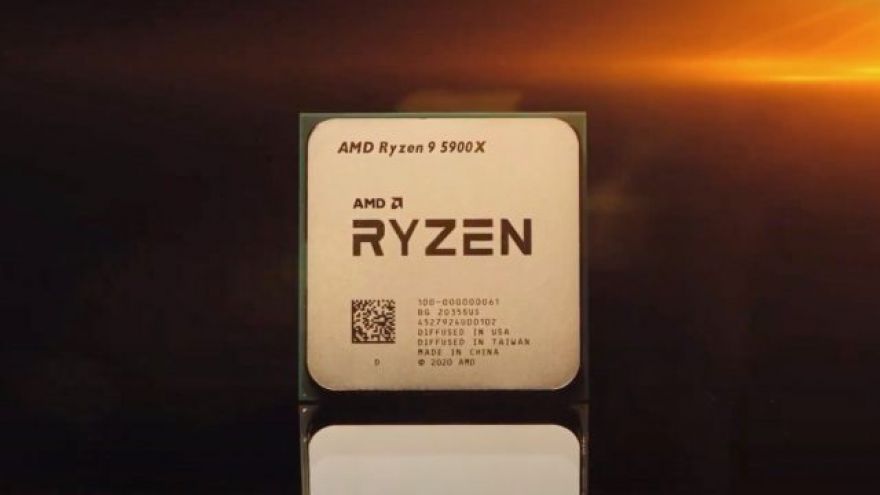
AMD has published details of a Spectre-like vulnerability that affects Zen 3 CPUs. It’s related to a new feature AMD introduced with its latest architecture called Predictive Store Forwarding (PSF). AMD is not aware of any code exploiting this issue in the wild but is releasing this information preemptively. PSF is what the result of a load will be and to execute instructions based on that assumption. PSF builds on an earlier performance improvement known as Store to Load Forwarding (STLF). STLF refers to the practice of transferring data from a store directly to a load without writing it to main memory first.
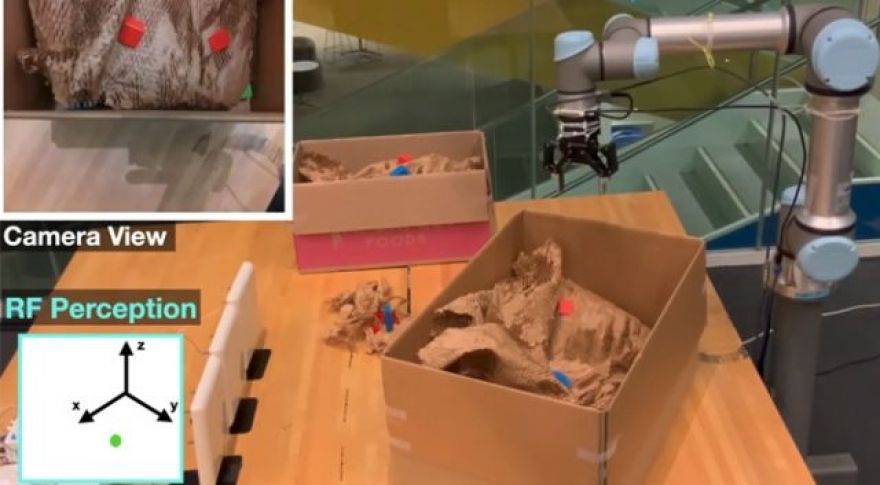
Creating robots that see the world like humans has been a challenge for scientists. While computer vision has come a long way, these systems are still easy to fool. So, why not give robots superhuman perception to compensate? MIT’s Fadel Adib created a robot that uses radar waves to find its target, . The robot, known as RF-Grasp, has traditional cameras for object recognition. The camera is mounted to the bot’s mechanical grasper, giving it a good view of anything the hand might be trying to pick up. However, what if the target is in a box or under something else? Radio waves can pass through the obstacle, and RF-Grasp can use the reflected signal to spot its target.
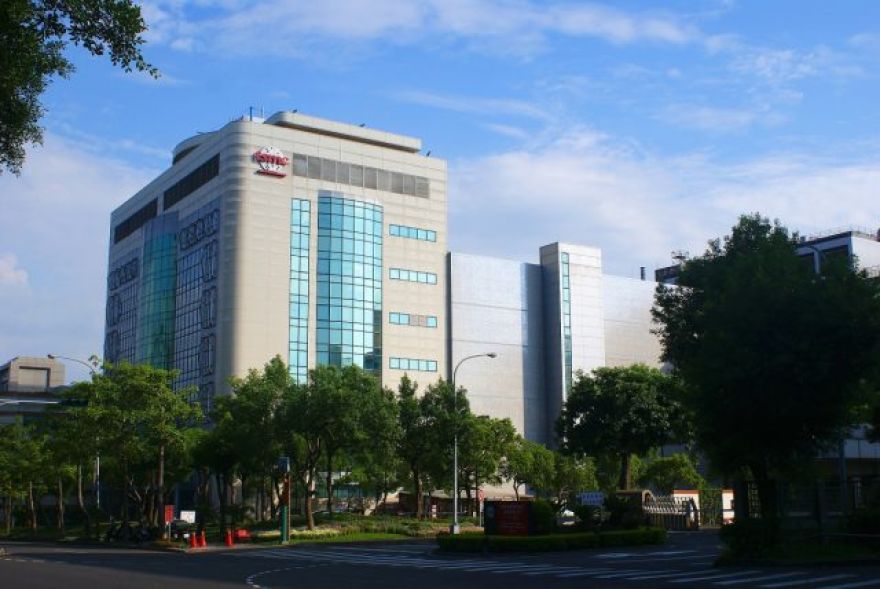
The silicon wars are heating up. Earlier this year, TSMC announced that it would increase its capital expenditures for the year to $28 billion, up from $18.17 billion in 2020. Now the company is promising to spend $100 billion over the next three years. If we assume the funds will be split evenly by years, TSMC is raising its capital expenditures (CapEx) by a further 18 percent. Intel, Samsung, and TSMC have all announced plans to boost their manufacturing capacities and pour more funding into researching new manufacturing techniques and materials. The ping-pong between companies has been something to see.