Behind only AI, Blockchain is the second-most-hyped developer technology. There are a few good reasons to use it in a project, but plenty of bad ones too. Whether blockchain technology is right for your application is ultimately up to you, but we’ll take you through some of the basics on whether it is worth serious consideration. Blockchain Stripped Bare It is far too easy to confuse blockchain technology with cryptocurrency and especially Bitcoin. Blockchains are actually much more general, with many other applications. In particular, blockchains do not need to involve currency. They also don’t have to involve mining, or trusting countless anonymous individuals to secure the system.
Earlier this week, surfaced of 13 supposedly critical security flaws in AMD processors. While at least some of the flaws appear to be real based on independent confirmation from security researchers, the manner and nature of the disclosure lifted a number of eyebrows. A simultaneously released report from a firm trying to short AMD’s stock made the entire affair look , especially since the firm in question, Viceroy Research, carried out a on a German company just a week ago. In that case, Viceroy took a large short position on the German company ProSieben, then accused it of questionable accounting practices.
As Intel has rolled out fixes for Spectre and Meltdown, it’s worked closely with Microsoft to make the required microcode updates available to as wide a group of hardware as possible. Newer motherboards might receive an update, but older systems, including the Ivy Bridge rig of this author, aren’t exactly getting UEFI updates these days. Luckily, those of you running Windows can get the required updates via Windows Update. Intel that it had completed microcode updates for CPUs stretching back into the Sandy Bridge era, and Microsoft has made those updates available via an expanded version of the same it’s been using for this purpose to-date.
Intel has released a new set of updates for the Meltdown and Spectre bugs that we first learned about in early January. It’s critically important to patch and update systems to avoid exposure to these flaws. Intel’s strategy has been to fix its newest systems first, followed by the earlier models. The fix rollout hasn’t been smooth; Intel had to pull back an entire set of updates and fixes at one point because they caused frequent reboot issues. Those problems have been resolved to the best of our knowledge, and anyone with an Intel CPU from any generation should be updating as soon as possible.

Understanding solar activity is a vital part of protecting spacecraft, but it’s difficult to know where the high-energy particles from a coronal mass ejection () will go before they get there. A team of scientists has now used data from a trio of NASA satellites to that can recreate a CME in 3D. A coronal mass ejection from the sun usually follows a solar flare, when magnetic field eruptions launch charged particles into space. The released plasma flies out on the solar wind, usually dissipating in empty space. However, some CMEs are pointed in Earth’s general direction. So, plasma can strike the upper atmosphere shortly after a flare.

If you’ve purchased a smartphone in the last several years, it’s most likely encrypted by default to protect your data. Canada-based Phantom Secure went a step further with its customized, ultra-secure Blackberry and Samsung smartphones. Now, the company’s CEO Vincent Ramos is behind bars, by tailoring those devices to suit the likes of drug cartels and gangs. According to the FBI complaint, Phantom Secure wasn’t just making secure smartphones. The company’s management allegedly knew its phones were purchased primarily by criminals, and it actually designed features with that in mind. The FBI cites the notoriously violent Sinaloa drug cartel as one of Phantom’s best customers.
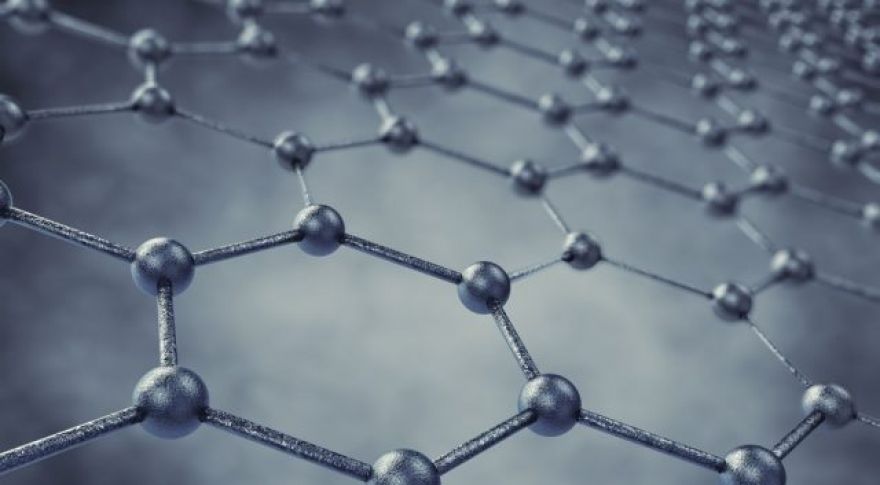
Graphene is an amazing material with an equally annoying set of constraints that make it extremely difficult to work with. One of the most significant problems we’ve had with adapting the material for commercial use is producing it. While a number of methods of graphene production have been demonstrated, none of them have lent themselves to the kind of massive scale that typifies the silicon industry’s ability to manufacture, well, silicon. In early 2016, the entire foundry industry was estimated to be capable of nearly 12 million wafer starts per month (in 200mm-equivalent wafers). Graphene doesn’t have to scale all the way up to that level before entering production, but any widespread adoption of the material requires it to achieve its own economy of scale.

Switzerland is a neutral gathering place for the affluent people of the world. Perhaps they stopped by Davos in January for the World Economic Forum. In March, they can set the Gulfstream down at GVA to check in with their bankers and then see what delights are in store at the 88th Geneva International Motor Show. Last week, we gave you the top ten of Geneva 2018. Here’s a look at the top cars for those of greater means. In rough terms, we mean those cars with a list price of $50,000 up through $1 million. Or more.

Most scientific discoveries are the product of years of careful research, but sometimes science happens by accident. Such was the case for researchers at the University of Nevada who were looking for a specific form of carbon dioxide in diamonds. Instead, they detected the . While it’s almost nonexistent on Earth, ice-VII might play an important role elsewhere in the solar system. Now, we’ve got a way to study this material up close. All the ice you’ve ever put in a drink or scraped off your car windshield is what’s known as ice-I. When water freezes, the oxygen atoms move into a hexagonal arrangement.