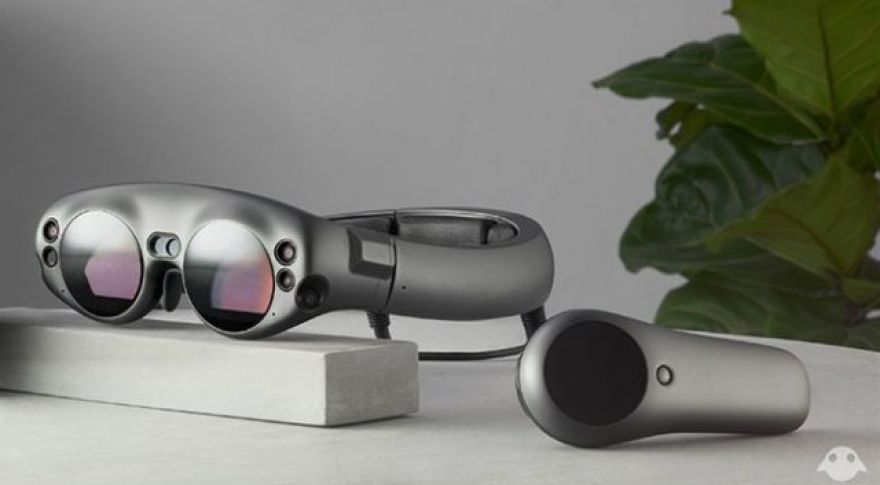
After four years of secrets, speculation, and vague product promises, Magic Leap has finally unveiled that its mixed reality headset will hit store shelves in an exclusive deal with AT&T. The company has also unveiled some prerecorded — but not live — demos of its technology, finally giving us a look at what the platform is capable of. Folks, “Magic Leap” may have been a misnomer. “Prosaic Plod” would be a better brand for this utterly unimpressive piece of kit. First, let’s establish some context. Here’s a concept video Magic Leap has previously shared for what it could accomplish:

We’re only a few days away from Amazon’s big Prime Day event, but the savings have already begun. Right now, you can get 66 percent off three months of an Audible subscription. And if audiobooks aren’t your thing, our friends at have assembled an excellent collection of the best deals across the web. So if you need a new computer, external drive, power bank, 4K TV, or some other gadget, check out the bargains below. Featured Deals for $4.95/month at Amazon (List price: $14.95/month). for $0.99 at Amazon (List price: $7.99/month). for $0.99 at Amazon (List price: $9.99/month).

As scientists study the stars, we’re finding closer and closer to home. Proxima Centauri b is just a few light years away, and now astronomers have tantalizing new details about the second closest exoplanet known as Ross 128 b. Through analysis of the host star, researchers say the exoplanet is small, rocky, and . The red dwarf star Ross 128 is just 11 light years away, which is in our own backyard in interstellar terms. Most exoplanets are detected using the transit method, where instruments like the spacecraft watch for brief dips in light as planets pass in front of their host stars.

Self-driving cars got two shots in the arm this week with the announcements Tuesday that both Daimler, parent of Mercedes-Benz, and BMW are moving forward on partnerships to improve autonomy. The upshot is more on-the-road testing that’s essential before the first Level 4 and Level 5 cars are put in the hands of buyers. The first announcement is that Daimler and partner Bosch will use the Nvidia Drive Pegasus AI platform, with the intention of shipping cars within five years, initially to be used as autonomous taxis. In the other, BMW says it will join the Apollo open autonomous drive platform of Baidu.

More people than ever are filing complaints with the Federal Communications Commission (FCC), and Chairman Ajit Pai is not okay with that sort of thing. This week, the FCC will used by most consumers that could make it harder (and more costly) to get your voice heard by the FCC. What used to be free could cost you $225. Currently, you can file an informal complaint with the if you feel you’ve been wronged by a telecommunications firm under FCC purview. The agency will (eventually) evaluate your claim, contact the company, and require a written reply. It is also required to take these complaints into consideration when making rules.

At the height of the craze several years ago, a website called Defense Distributed made waves by offering a fully 3D printed gun called the Liberator for download. You probably haven’t heard a lot about the Liberator and similar weapons in the last few years because designer Cody Wilson was at odds with the US government. After threatening the prosecute Wilson, the Justice Department under Trump has , PCMag reports, and will rewrite federal law to make 3D printed guns legal. Within days of posting the Liberator files online, they had been downloaded more than 100,000 times. The single-shot pistol wasn’t anything special, but it worked and anyone could make one.
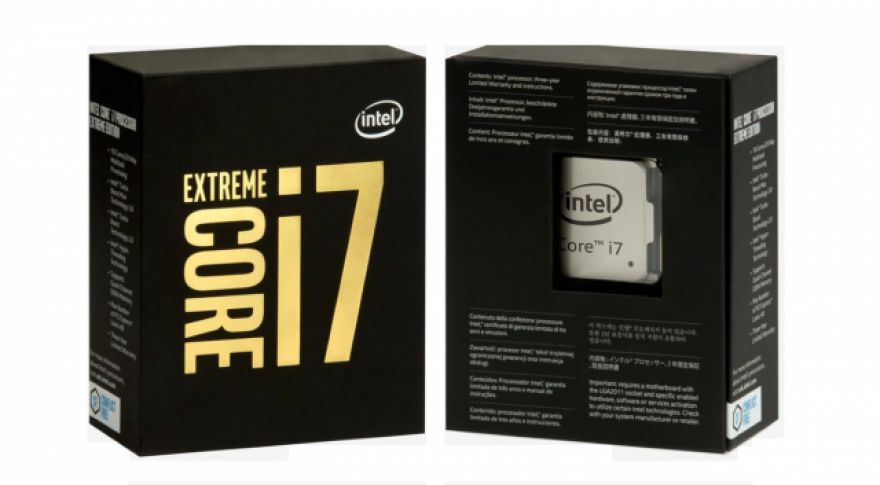
Yesterday, former Intel engineer Francois Piednoël that the long era of the Intel “Extreme Edition” processor family was about to come to an end. Intel is now pushing back on that messaging, claiming that the branding is very much alive. As a brand, the Extreme Edition dates back to September 2003 — and I’ve got a fun story to tell about it. Back then, Intel had ruled the entire PC performance stack across consumer, desktop, and workstations almost since the introduction of the Pentium 4 Northwood in January 2002. But while AMD had kept a tight lid on Athlon 64, Intel knew it had a problem on its hands.

Over the past three years, we’ve seen a revolution rippling through NAND manufacturing as companies transition towards stacked NAND configurations that pile dozens of layers of storage directly on top of each other, rather than in a conventional 2D configuration. Samsung has announced another major milestone in this process and is now in volume production on its 5th generation V-NAND (V-NAND is Samsung’s specific brand for its 3D NAND products). The new NAND will use Samsung’s Toggle DDR 4.0 interface and transfer data between storage and memory inside the device at up to 1.4Gbps. This presumably refers to the speed of data movement between any DDR cache within the drive and the drive itself.

Google has become adept at gobbling up your online activities to build a profile of you. That’s how it serves ads, but it also affects the content you see on services like and traditional search. Browsers have private browsing modes to disassociate your actions with your profile, but that’s no help in the YouTube Android app. Google has been testing a handy Incognito Mode inside for that app, and . Google began what it calls “A/B testing” of the feature earlier this year. That means a small group of users will see a new feature so Google can gauge how they respond to it, compared with another group that gets a different version of the element or no new functionality at all.