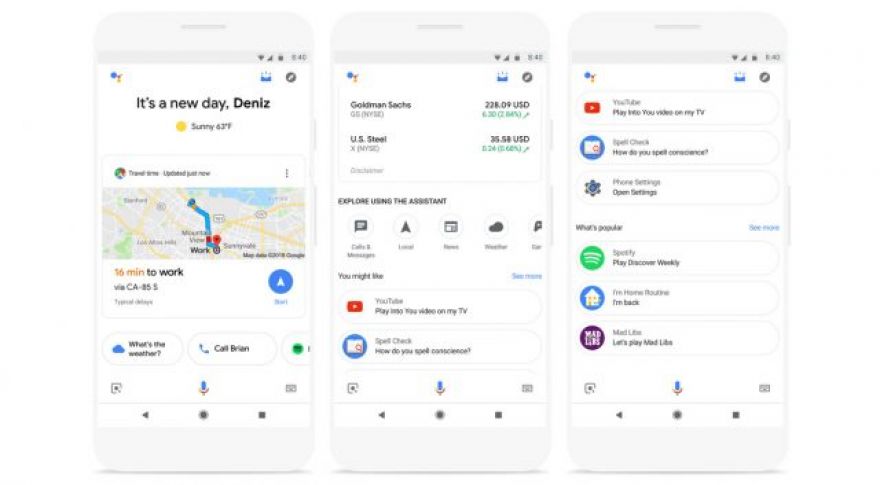
Back in the days of Android Jelly Bean, Google focused much of its AI efforts on a feature called Google Now. The idea was Google Now could scrape useful data from your account activity and proactively give you helpful alerts and actionable notifications. Google a while back, and the revamped Feed doesn’t include the same predictive features. Now, some of them are . It’s not quite Google Now, but it could still be useful. The myriad of Google services and branding changes can make your head spin, but we’re really just talking about two current products. The Google Feed is the news-focused card UI that replaced Google Now.

Ookla has released its annual report on , powered by SpeedTest Intelligence. The US improved its download speeds markedly from 2017 to 2018, but is still ranked poorly overall relative to our overall economic strength. The data set Ookla uses is drawn from over 12 million speed tests performed during Q1 and Q2 of 2018 by 2,841,471 unique devices. Overall mean download speed was 27.33Mbps while upload performance was 8.63 Mbps. Download bandwidth increased more than 20 percent compared with the same period in 2017, while upload bandwidth grew by just 1.4 percent. According to the report, T-Mobile’s recent performance improvements are the result of aggressive deployment of 600MHz spectrum.
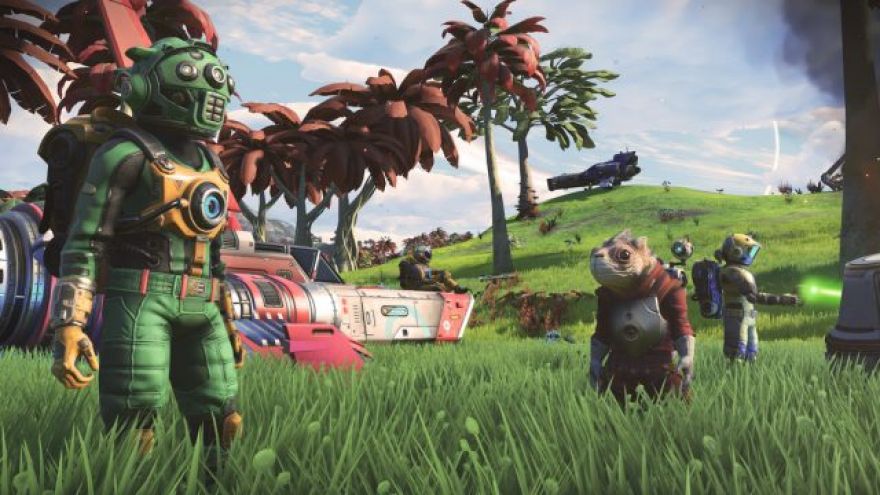
Released in 2016, No Man’s Sky was widely seen as a disappointment following from the developers. This space exploration sim felt remarkably stagnant for a supposedly endless galaxy, though Hello Games worked to add features and refine the experience after launch. Furor (and interest) has died down since then, but the developers are still working on No Man’s Sky. The , adding myriad features that should have been included in the initial game. At launch, Hello Games claimed the galaxy of was simply too large for true multiplayer. While you shared the same universe with other players, there was supposedly no chance of running into them.

A little over a month ago, Valve announced a new that ranked as one of the more shameless attempts to eat its cake and have it too. The company’s new policy amounts to “We won’t curate for either content or technical quality of the release unless something is illegal or ‘straight up trolling’, in which case we’ll curate.” It’s this last part — and the vagueness of “straight up trolling” — that led us to slam the decision as a dodge rather than any kind of principled stand. Lo’ and behold, a month later, developers are still having problems parsing Valve’s content curation policy and the company has suspended the sale of adult games while it tries to work the mess out.
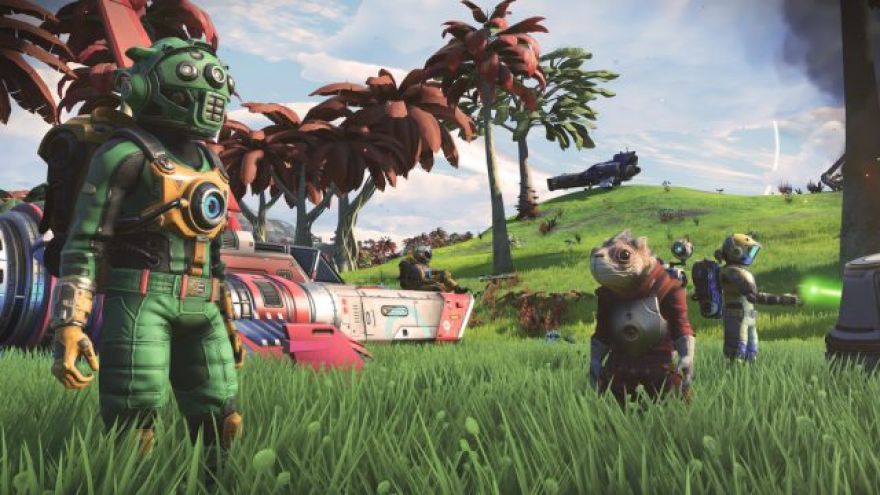
Released in 2016, No Man’s Sky was widely seen as a disappointment following from the developers. This space exploration sim felt remarkably stagnant for a supposedly endless galaxy, though Hello Games worked to add features and refine the experience after launch. Furor (and interest) has died down since then, but the developers are still working on No Man’s Sky. The , adding myriad features that should have been included in the initial game. At launch, Hello Games claimed the galaxy of was simply too large for true multiplayer. While you shared the same universe with other players, there was supposedly no chance of running into them.
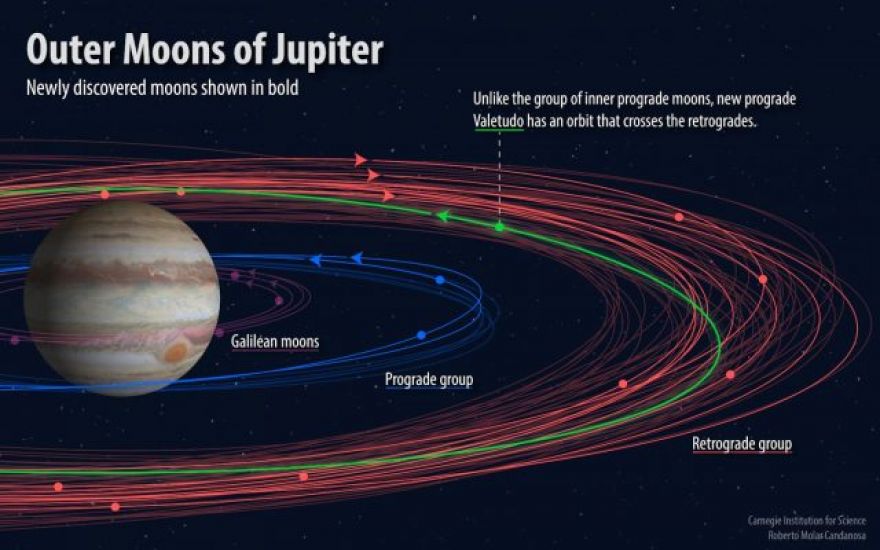
Famed astronomer Galileo Galilei discovered the first four moons of Jupiter way back in the early 1600s. More than 400 years later, astronomers are still finding moons orbiting the solar system’s largest planet. We’re not just talking about one or two stragglers, either. Astronomers from the Carnegie Institution for Science orbiting Jupiter, bringing the total to 79. The Carnegie Institution team, led by Scott Sheppard, didn’t set out to find even a single new Jovian moon. The team’s goal was to scan the sky for evidence of a massive ninth planet in the outer solar system. Many scientists are on the same quest, believing that a ghostly gas giant out past the orbit of Neptune could explain a number of orbital quirks in other objects.

We at ExtremeTech are as disappointed as anyone that the we were implicitly promised over the years have not yet arrived. A Canadian firm called Opener wants to finally make flying cars a reality with the . Unlike past attempts, Opener isn’t trying to match the capabilities of a car. The Black Fly doesn’t go very far or very fast, but it’s all electric, amphibious (just in case), and you allegedly don’t need a pilot’s license to fly it. The single-seat BlackFly is a vertical takeoff and landing (VTOL) craft, which is a prerequisite for it to be useful as a personal vehicle.
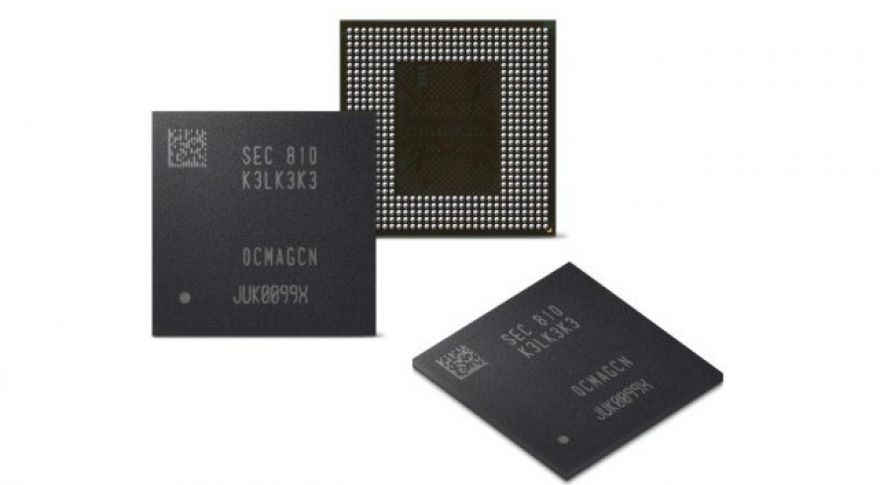
Samsung has announced early production on 8Gb (1GB) LPDDR5 modules using 10nm-class* process nodes and with a specific focus on 5G and automotive applications. The new memory will feature a maximum transfer speed of 6,400Mbits/s with much lower VDD (LPDDR4 specifies a supply voltage of 1.1v; LPDDR5 can operate with a VDD of just 0.5v). Image Keep in mind, however, that the voltage targets shown above are for the standard, not for any specific IC. According to Samsung, its memory will use a higher VDD — 1.1v for operation at the 6,400Mbit/s performance level, and 1.05v for a lower 5,500Mbit/s bandwidth.
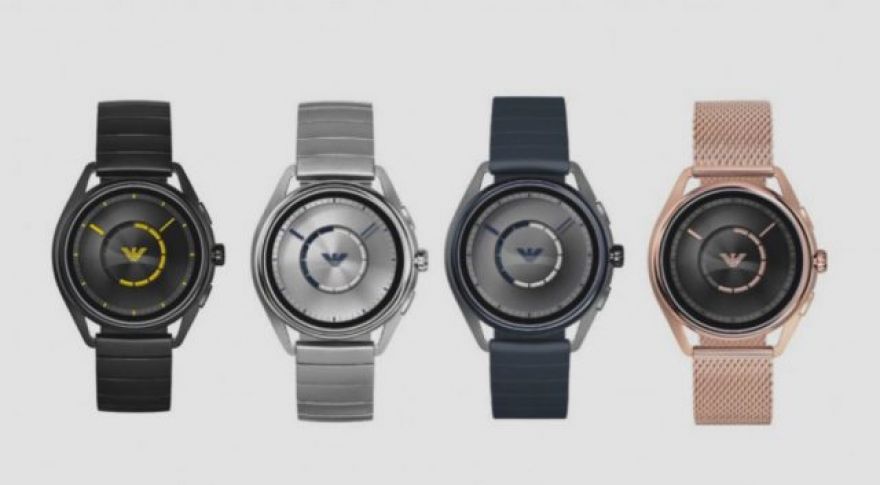
Armani has a reputation as a high-end fashion brand, and in this day and age, that means it has to be making a Wear OS device. And indeed, Armani is running Google’s struggling wearable platform. This is a premium smartwatch with pricing at and above $300, but it does have all the necessary hardware features to compete with the best of Wear OS right now. For whatever that’s worth. The Emporio Armani Connected is not the first smartwatch under the Armani name, but it is the most well-equipped. There’s a 1.19-inch round OLED display, a metal body, heart rate sensor, and even NFC for Google Pay functionality.