
DevOps is a lot like that old story about how sharks die when they stop moving. While it’s actually , DevOps and those that practice the art belong to a job sector that lives under a constant innovate-or-die mentality. Ideas must be generated. Prototypes must be refined. Improvements must be made. And it all has to happen yesterday. To succeed in DevOps requires individuals who can not only move a product through that conveyor belt of development but ultimately watchdog and optimize the pace of that operation so nothing ever falls through the cracks. lays out the entire DevOps process, offering insight into the tools and techniques to become the person capable of directing a company’s full development chain.
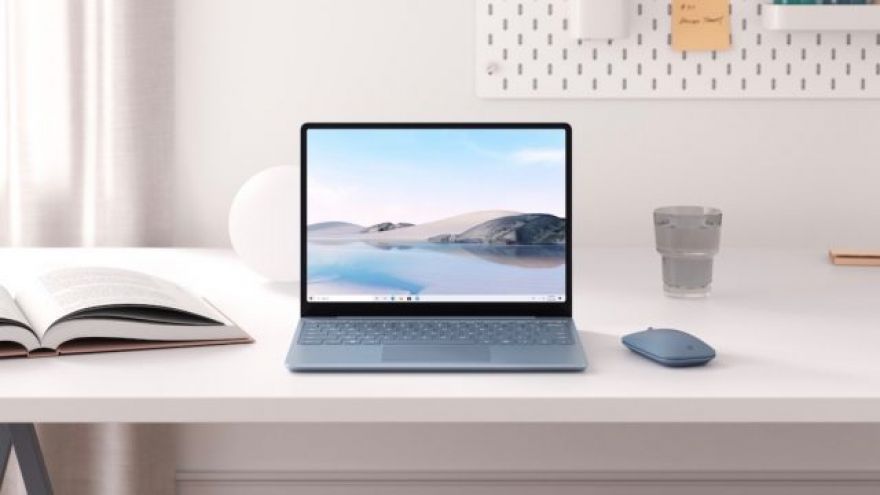
Microsoft made a pair of hardware announcements today. First, the company debuted a surprise $549 Surface Laptop Go. This is the first time we’ve seen Microsoft push the Surface Laptop family to a price point this low, though there are some hefty compromises that may make this a limited-utility purchase. Second, the company announced a refreshed Surface Pro X, based on its new SQ2 processor. Let’s talk about the Surface Laptop Go first. It starts at $549 and offers a smaller, 12.4-inch display, with a 1536×1024 resolution. That works out to 148 PPI, and it’s definitely a step down compared with the 1920×1080 panels that are more common these days.
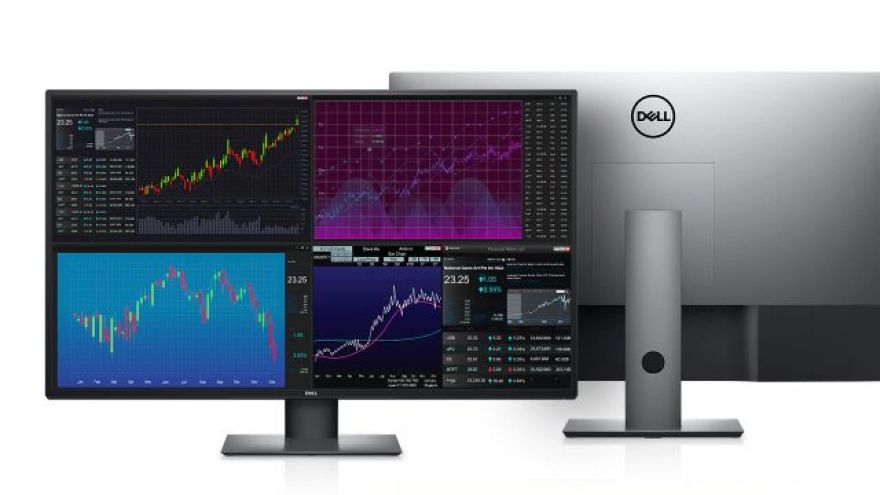
Today you can get your hands on a 4K 43-inch Dell monitor that is available with hundreds cut off its retail price. 43-Inch 4K USB-C Monitor for $710.99 from Dell with promo code STAND4SMALL (Regularly $1,049.99) 128GB 6.7-Inch Unlocked Smartphone for $799.99 from Amazon (Regularly $999.99) Intel Core i7-1065G7 14-Inch 1080p Laptop w/ Nvidia GeForce MX330 GPU, 8GB DDR4 RAM and 256GB NVMe SSD for $737.09 from Dell with promo code STAND4SMALL (Regularly $1,498.57) M.2 NVMe SSD for $179.99 from Amazon (Regularly $249.99) Intel Core i5-10210U 15.6-Inch 1080p Touchscreen Laptop w/ 8GB RAM and 256GB PCI-E SSD for $599.99 from Best Buy (Regularly $799.99) 1080p 23.8-Inch 75Hz IPS FreeSync Gaming Monitor for $119.99 from Newegg (Regularly $179.99) AMD Ryzen 3 3200U 15.6-Inch 1080p IPS Laptop w/ 4GB DDR4 RAM and 128GB NVMe SSD for $349.99 from Amazon (Regularly $439.99) (Nintendo Switch) for $69.88 from Amazon (Regularly $79.99)
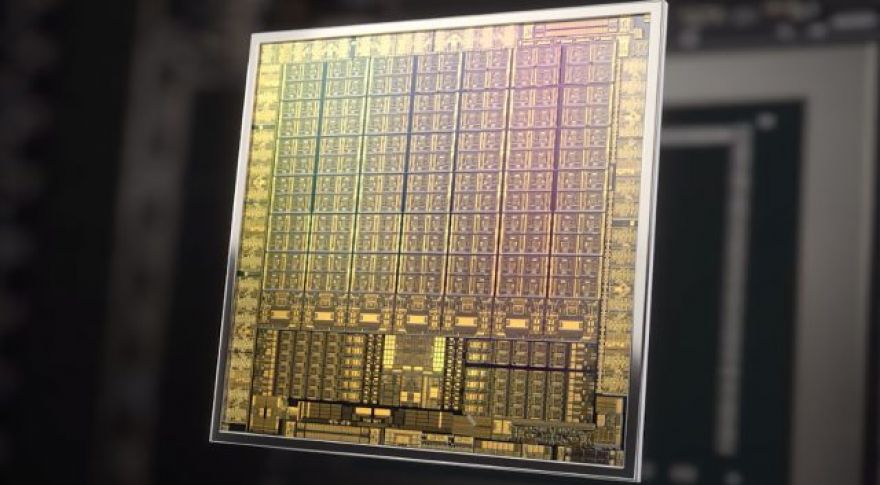
One of the frustrating things about trying to sort out the RTX instability issues from last week’s launch has been the relative paucity of comments from vendors. Now, however, they’ve collectively broken their silence — and they’re all saying pretty much the same thing: Update your video drivers. Zotac: “A new GeForce driver version 456.55 has been released and we urge all to re-install your graphics card drivers as we believe it should improve stability…Our graphics cards have undergone stringent testing and quality controls in design and manufacturing to ensure safety and great performance.” Gigabyte: “It is false that POSCAP capacitors independently could cause a hardware crash.
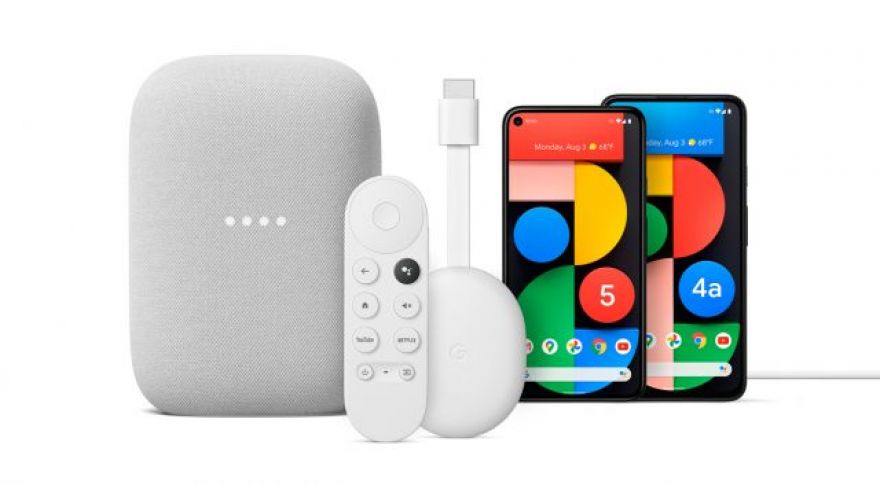
Google is the latest company to move its annual product launch online — the company just unveiled all its long-rumored 2020 products including two new phones, a smart speaker, and a new Chromecast. The speaker and Chromecast have gotten much more powerful, but the phones are a modest follow-up to last year’s flagship Pixel phones. Pixel 5 and Pixel 4a 5G The nest Pixel phones are also Google’s first-ever 5G devices — only sub-6GHz 5G for the 4a, though. Faster but less stable mmWave is only supported on the Pixel 5. The Pixel 4a 5G is the more affordable of the two, clocking in at $499.
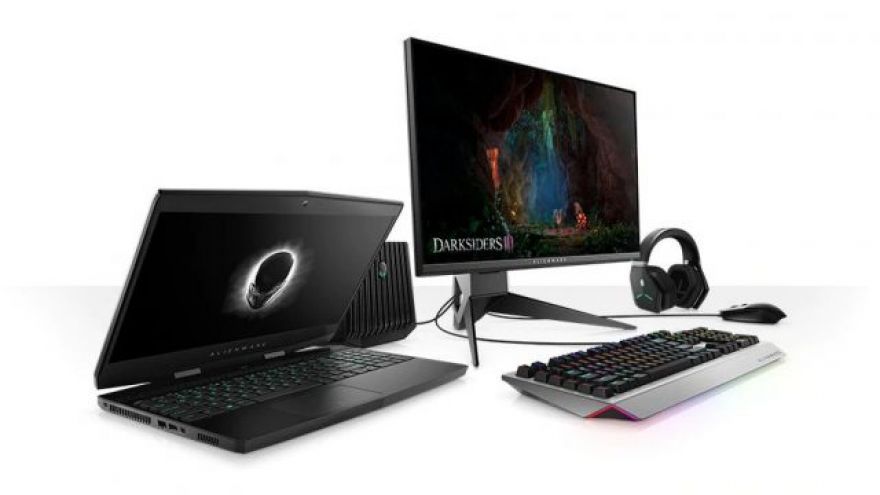
Today Dell is offering its popular Alienware M15 R1 gaming laptop with over $1,000 knocked off the retail price. This system is equipped with a top-notch Intel Core i7 processor and an Nvidia RTX 2070 Max-Q GPU, which make it an ideal system for gaming. Intel Core i7-9750H 15.6-Inch 1080p 144Hz Gaming Laptop w/ Nvidia GeForce RTX 2070 Max-Q, 16GB DDR4 RAM and 512GB M.2 PCI-E SSDs for $1,199.99 from Dell (Regularly $2,218.98) 27″ 1080p 144Hz VA Curved Gaming Monitor for $209.99 from Dell (Regularly $279.99) AMD Ryzen 3 3200U 15.6-Inch 1080p IPS Laptop w/ 4GB DDR4 RAM and 128GB NVMe SSD for $349.99 from Amazon (Regularly $439.99) (Nintendo Switch) for $69.88 from Amazon (Regularly $79.99) 6-Month Subscription for $29.97 from Amazon (Regularly $59.94) Intel i5-10400F 6-core Gaming Desktop w/ GTX 1650 Super GPU, 8GB DDR4 RAM and 1TB HDD for $599.99 from Dell with promo code G5DTAFF25 (Regularly $884.98) 50-inch 4K UHD HDR Fire TV Edition Smart TV for $249.99 from Amazon (Regularly $349.99)
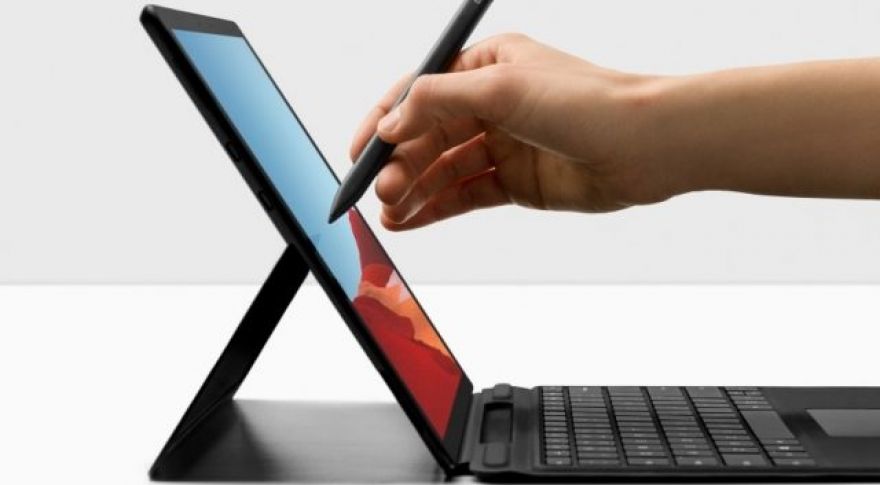
For the last couple of years, it’s been possible to buy an ARM PC that runs Windows, with an average user experience that ranges from “acceptable” to “lousy,” depending on what kind of work you need to do with your PC. Some of the problems Windows 10 on ARM is grappling with today are the same issues Windows RT suffered from in 2012. While Windows on ARM in 2020 has the x86 emulation capabilities that Windows RT lacked, the feature has been subject to certain restrictions regarding software support. Only 32-bit applications have been supported — and not all of them.

As the storage wars between SSDs and HDDs drag on, SSDs have seemed to be gaining a decisive upper hand. Companies like Toshiba, Seagate, and Western Digital have shown off their next-generation technologies like Energy-Assisted Magnetic Recording (EAMR, WD) and Microwave-Assisted Magnetic Recording (HAMR, Seagate), but both companies seem to be having trouble shipping drives in significant quantities. One of the major questions facing the magnetic spinning industry is whether to push forward towards 10-platter designs. Those of you who last looked up from your SSD performance graphs when 5-platter drives were all the rage may be surprised, but we’re already up to nine platters.
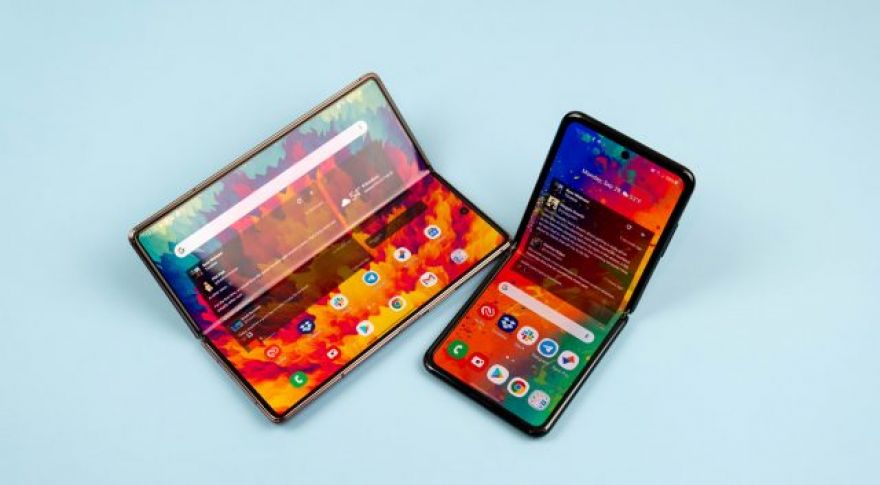
The first iPhone launched more than a decade ago, ushering in the modern smartphone era. Device makers have since toyed with various phone designs with physical keyboards, ticker displays, and modular components, but none of these ideas stuck. In the last few years, almost every phone of consequence has been a larger version of the original iPhone’s candy bar form factor. We’re due for a change, and I think foldables are it. I was encouraged by the first-gen foldables in 2019 and early 2020, but after using the new Samsung Galaxy Z Fold2, I’m convinced we’ll all own foldables in the future.