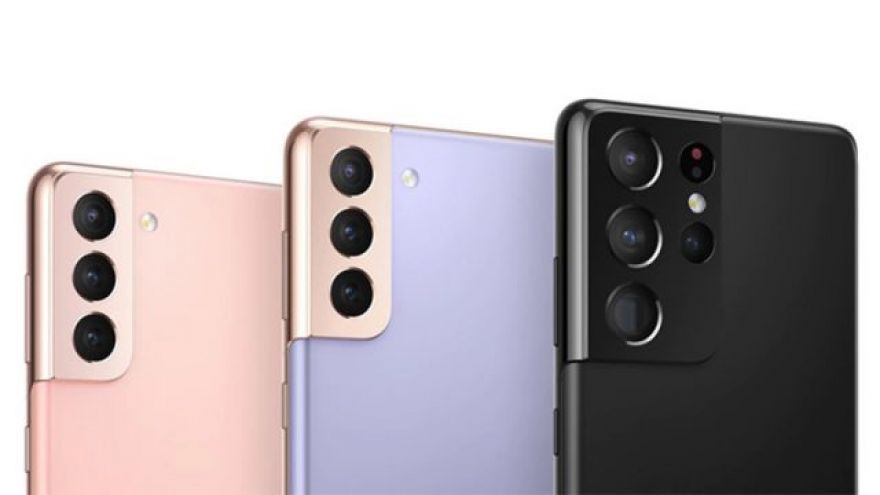
The is Samsung’s current flagship smartphone with performance that rivals the best phones money can buy. Today you can get the 128GB model of this phone with a $100 discount that drops the price to just $699.99. 128GB Unlocked Smartphone for $699.99 from Amazon (List price $799.99) Intel Core i5-11300H 15.6-Inch 1080p Laptop w/ Intel Iris Xe Graphics, 8GB DDR4 RAM and 512GB NVMe SSD for $699.00 from Dell (List price $1,327.14) 802.11ac AC1750 Smart WiFi Router for $79.99 from Amazon (List price $99.99) Wireless Earbuds for $197.99 from Amazon (List Price $249.00) M1 Chip 13.3-Inch Laptop w/ 8GB RAM and 512GB SSD for $1,099.99 from Amazon (List price $1,249.00) Intel Core i3-10110U 13-Inch 1080p Touchscreen Chromebook w/ 4GB DDR4 RAM and 64GB eMMC Storage for $311.24 from Amazon (List price $429.99)
Microsoft took the wraps off Windows 11 recently, and we expect the new OS to arrive later this year. Upgrading to a new version of Windows is often a painful process, and in the past, you were stuck even if the new software ruined your workflow. It’s different this time: Microsoft says you’ll be able to go back to Windows 10 if you don’t like . You’ll only have 10 days to decide, though. How will you know if Windows 11 is worth using? There’s a preview program for Windows 11, but the preview builds are still missing some elements of the final release.
I’ve written a number of articles about Deep Space Nine and my efforts to improve and upscale it over the past 16 months, but this is the long-promised tutorial — the explanation of how to do what I’ve done, in more detail than I’ve shared it before. If you’ve been waiting for the step-by-step explanation, this is what you’ve been waiting for. PAL and NTSC are both covered in this guide. Why I Don’t Use Terms Like HD, UHD, or 4K The reason I don’t call this version of DS9 “DS9 4K” or even “DS9 HD” is because this isn’t HD-quality footage and nothing I’ve learned in the past 16 months can change that.
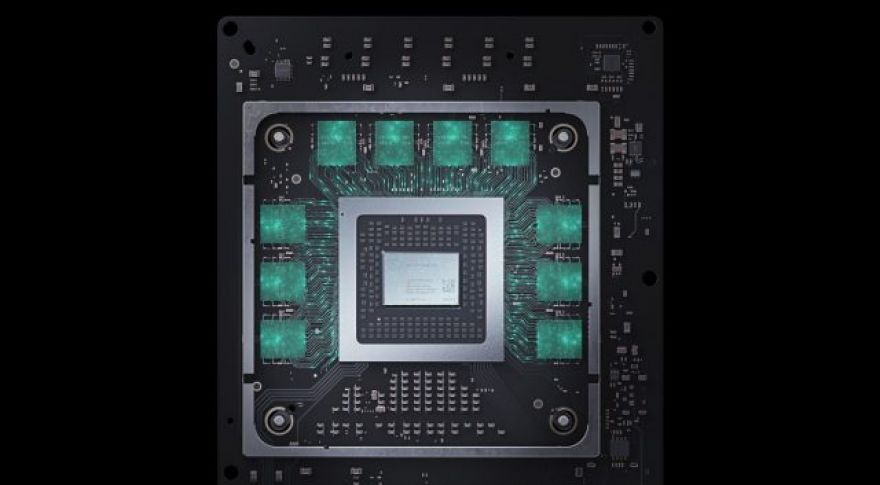
Microsoft is apparently planning its own AI upscaling method, possibly in the same vein as Nvidia’s DLSS and AMD’s FSR. The company hasn’t made any direct announcements, but it has put up two job offers, one for a senior software engineer and the other for a principal software engineer for graphics. The position notes that “The Xbox graphics team is seeking an engineer who will implement machine learning algorithms in graphics software to delight millions of gamers. Work closely with partners to develop software for future machine learning hardware.” The job description is more general, but the senior software engineer’s responsibilities list such tasks as “research and prototype machine learning algorithms” and “implement software that incorporates machine learning algorithms for graphics in shipping hardware.
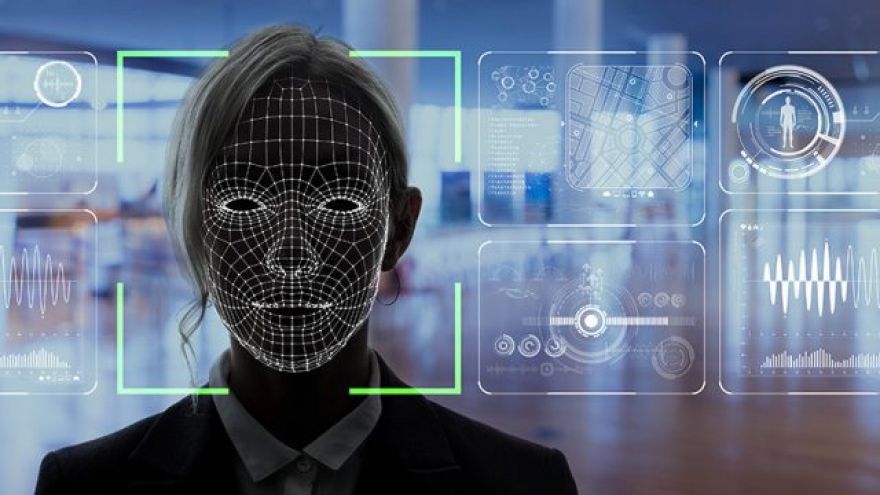
China takes fears of video game addiction among kids very, very seriously. It’s one of several countries that enforces a “gaming curfew” for those under 18, and now gaming heavyweight Tencent has . These games will now use facial recognition to make sure no one underage is playing games too late at night. This is only the start—Tencent says its “Midnight Patrol” technology is coming to more games soon. Back in 2019, the Chinese government rolled out the curfew, which requires players to sign in with an ID number and real names. It became clear pretty quickly that kids who wanted to keep playing popular mobile games at all hours were finding ways.

Saturn’s moon Enceladus doesn’t get as much attention as Europa, but it too has an internal liquid water ocean. It may also be more active than Europa with frequent geysers erupting from the surface. Years back, when NASA’s Cassini-Huygens probe explored the Saturnian system, scientists were fascinated to see how much methane was present in Enceladus’ geysers. At the time, it seemed feasible the methane was naturally occurring, but that’s less likely now that new research has . That leaves biological sources—life—as a leading possibility. Saturn is more distant than Jupiter, and thus its moons are even more frigid.
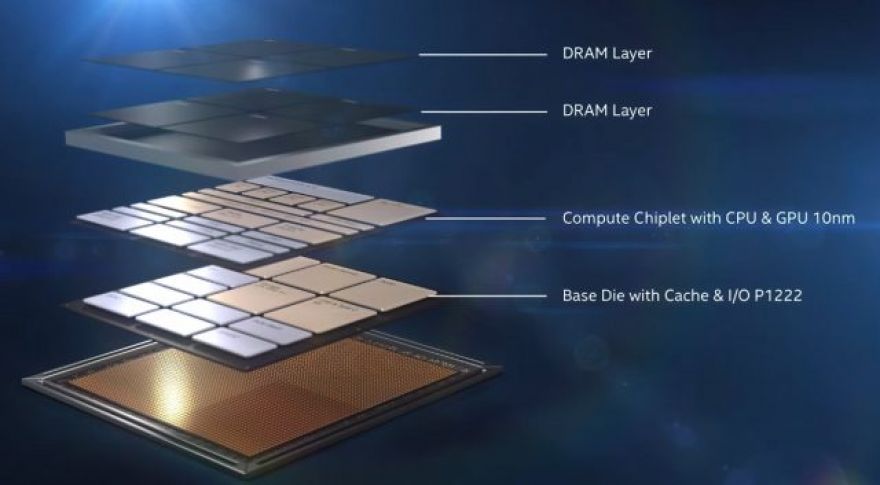
When Intel launched Lakefield back in June 2020, it felt like the beginning of something new. ARM may have deployed big.Little a decade ago, but Intel and AMD had previously stuck to multi-core CPUs built on a single CPU design. Lakefield combined one Ice Lake “big” CPU cores with four Tremont “little” CPU cores. Lakefield targeted the low-power market, with a TDP of just 7W, and was intended to compete with ARM products featuring similar power consumption envelopes. Now, Intel has announced an early retirement for the CPU. Lakefield is entering end-of-life barely a year after launch. Intel’s explanation is straightforward: “Market demand for the products listed in the ‘Products Affected/Intel Ordering Codes’ table below have shifted to other Intel products.

Asrock has published a list of motherboards it believes might be compatible with Windows 11 when that OS launches later this year. Unfortunately, we’ve got to frame the list that way because the manufacturer itself isn’t sure what’s going to happen with every product. The list, however, may shed some light on how Microsoft’s thinking is evolving. First, here’s the expected compatibility as Asus sees it. Intel PPT and AMD fTPM support are analogous for the purpose of this discussion: We’d normally break Threadripper out into its own support column, but Asrock elected to include it here with the 300-series chipsets.

You know that most of the passwords you use are weak by any measure, and you know that you should invest in some way to keep them safe – but it’s something that you just never seem to get to. It’s always saved for later on when you have more time. But the more time you procrastinate instead of investing in a secure way to save, store, and input passwords, the more likely you are to be hit by a hack that can compromise your information, software, computing equipment, social media, or even bank accounts. But it’s actually not that difficult to get something set up that will protect your information on your behalf.