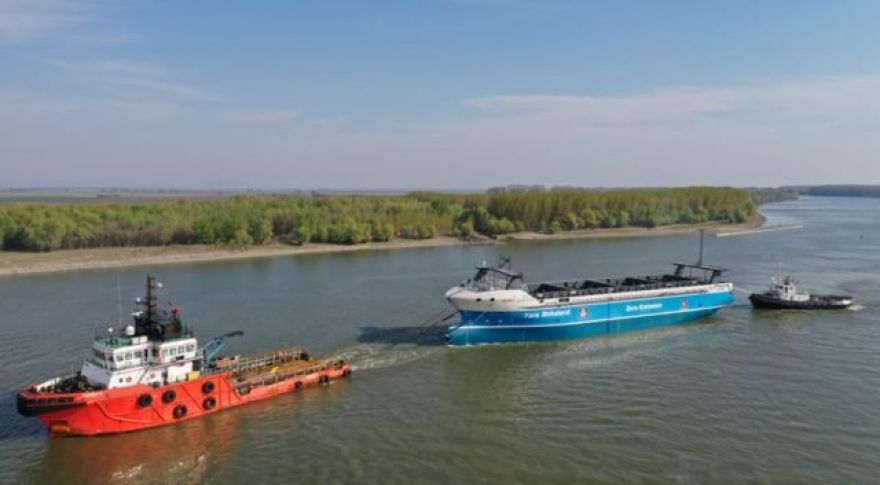
World’s First Autonomous Electric Cargo Ship Will Set Sail This Year
Yara originally planned on setting the Birkeland on its maiden voyage in 2020 after three years of development, but thanks to the pandemic, the company was forced to postpone the trip. In November, Yara finally received the ship from the Norwegian shipyard where it had been stored and resumed testing and preparation.
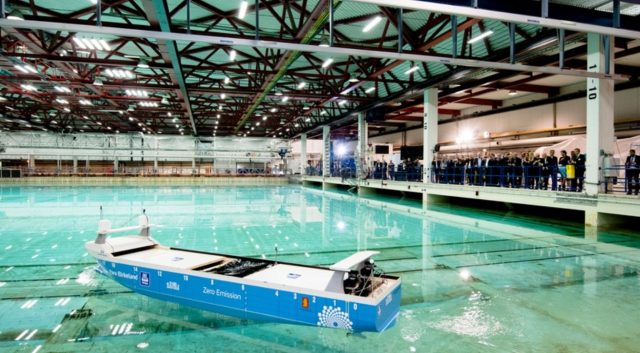
A model of the Yara Birkeland at launch. (Photo: Yara International)
At 80 meters long and 15 meters at the beam, the Birkeland is hardly the largest ship at the shipyard. According to , it’s capable of carrying 120 TEU—twenty-foot equivalent units, for those who don’t have their sealegs—and possesses a deadweight of 3,200 metric tons. (For perspective, a majority of smaller cargo ships can carry anywhere from .) None of this is to say that the Birkeland won’t make waves in the shipping industry; innovation has to start somewhere, and no one needs an electric, crewless version of the Suez Canal from earlier this year. Once it’s set sail, the Birkeland will travel at a modest speed of six to seven knots, though it can reach a maximum of 13. Its two 900 kW Azipull pods and dual 700 kW tunnel thrusters will propel it from Herøya to Brevik while three remote control centers monitor the trip.
Yara’s autonomous electric ship is the sustainable advancement that nobody quite asked for but that . While a crewless cargo ship isn’t as flashy as, say, delivery drones and self-driving Teslas, it’s a development that will hopefully help to mitigate the ’s current responsibility for 3 percent of global greenhouse gas emissions. There’s also the chance that shipping vehicles not reliant on human labor will help to reduce shipping costs over time—though whether that’s a pro or a con depends on where you stand, as automating a piece of a supply chain almost always results in the loss of jobs.
Now Read: