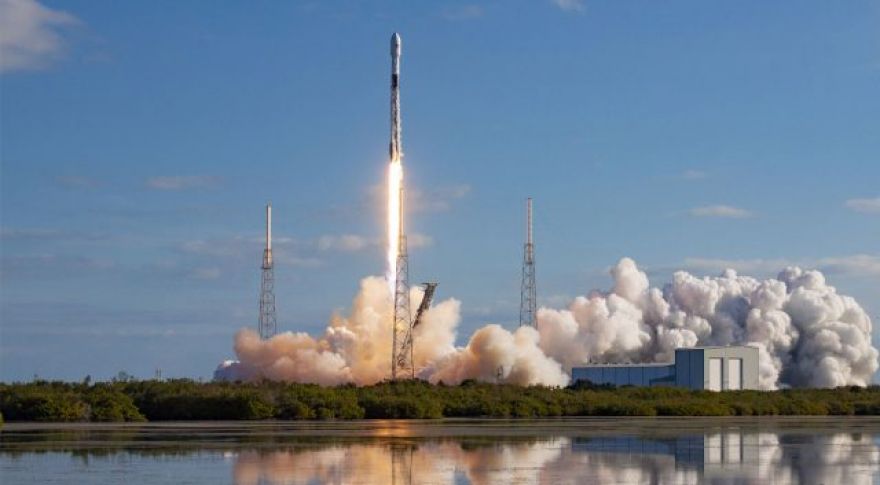
SpaceX Launches Fourth Batch of Starlink Internet Satellites
After a series of weather-related delays, SpaceX has successfully launched another batch of internet satellites. This payload of 60 satellites brings SpaceX’s total count to 240, putting it even farther in the lead as the world’s largest satellite operator. Naturally, SpaceX also recovered the first stage booster for later use, possibly on another Starlink launch — the company hopes to have thousands of small satellites in orbit by later this year.
SpaceX initially had the launch set for Monday, but winds forced a cancellation. The Tuesday launch was then called on account of poor weather in the landing zone.
So far, regulators have approved SpaceX to launch 12,000 satellites, which dwarfs the current number of active satellites around Earth at a bit over 2,000. Over 7,000 of those satellites will be in very-low Earth orbit (VLEO) with the rest in geosynchronous low-Earth orbit. The VLEO units will allegedly help SpaceX offer internet access with latency similar to terrestrial connections. Current satellite internet systems often have lag that many times worse than the average cable connection.
Successful deployment of 60 Starlink satellites confirmed!
— SpaceX (@SpaceX)
Astronomers around the world are beginning to learn that the first few days after a Starlink launch are a . The swarms of satellites are more likely to appear as bright streaks in images as they make their way into higher orbits. SpaceX says it will work with the scientific community to lessen the impact of its satellite constellation, but there is concern that 12,000 or more Starlink nodes will cause irrevocable changes in the sky.
SpaceX CEO Elon Musk has said that it will take at least 400 satellites to provide limited connectivity on the ground and twice that many for moderate coverage. At this rate, Starlink service could start rolling out in the coming months. The company is currently aiming for two Starlink launches in February, and that would put SpaceX within striking distance of the minimum coverage threshold.
Now read: