Scientists Are About to Redefine the Kilogram
The kilogram is one of the most important and widely used units of measure in the world — unless you live in the US. For everyone else, having an accurate reading on what a kilogram is can be vitally important in fields like manufacturing, engineering, and transportation. Of course, a kilogram is 1,000 grams or 2.2 pounds if you want to get imperial. That doesn’t help you define a kilogram, though. The kilogram is currently controlled by a metal slug in a French vault, but its days of importance are numbered. Scientists are preparing to .
It’s actually harder than you’d expect to know when a measurement matches the intended standard, even when it’s one of the well-defined Systéme International (SI) units.
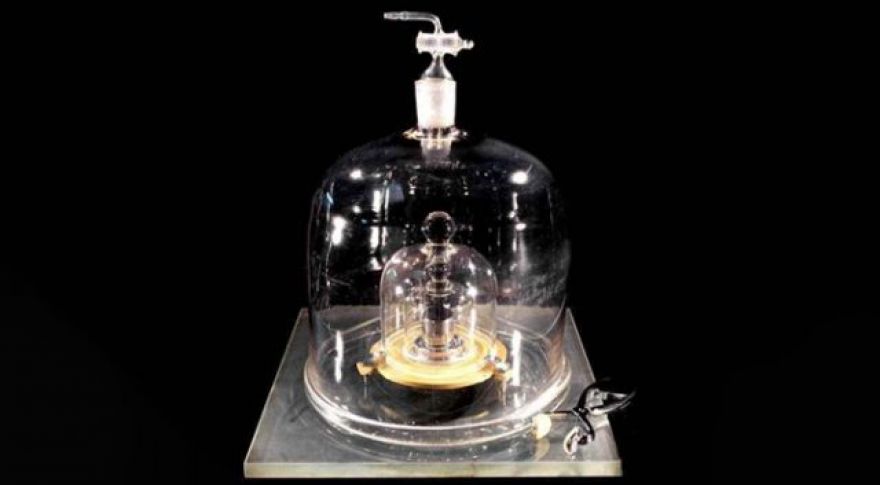
That brings us to the kilogram, which is a measurement of mass. Weight is different and changes based on gravity, but a kilogram is always a kilogram because it comes from measurements of density and volume. The definition of the kilogram is tied to the International Prototype of the Kilogram (IPK, see above), a small cylinder of platinum and iridium kept at the International Bureau of Weights and Measures in France. Scientists have created dozens of copies of the IPK so individual nations can standardize their measurements, but that’s a dangerous way to go about it. If anything happened to the IPK, we wouldn’t have a standard kilogram anymore.
Later this month, scientists at the international General Conference on Weights and Measures are expected to vote on a new definition for the kilogram, one that leaves the IPK behind and ties the measurement to the unchanging laws of the universe. Researchers from the National Institute of Standards and Technology in the US and the National Physical Laboratory in England are working on the problem of connecting mass with electromagnetic forces.
The Kibble Balance at the UK’s National Physical Laboratory.
The heart of this effort is the Kibble Balance, a stupendously complex device that quantifies the electric current needed to match the electromagnetic force equal to the gravitational force acting on a mass. So, it does not measure mass directly but instead measures the electromagnetic force between two plates. This allows scientists to connect the mass of a kilogram to the Planck constant, which is much less likely to change than a metal slug in a French vault.
So, the kilogram isn’t changing in any way that matters in your daily life, but that’s kind of the point. The kilogram is important, so it can’t change. Redefining the kilogram to get away from the IPK ensures it remains the same forever.
Now read: , , and