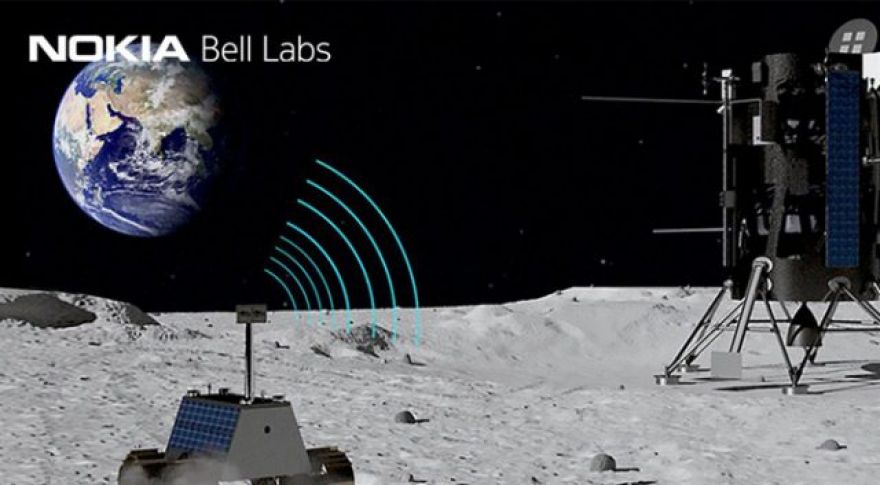
Nokia Is Developing a 4G Network on the Moon With 5 KM Range
NASA is gearing up for a return to the moon, and the communication technology of yesteryear just won’t do. Last year, NASA to begin developing cell towers for the moon. We’re now getting our first hints of how Nokia will go about that thanks to a new interview from Fierce Wireless. , who runs the Enterprise and Industrial Automation Research Lab at Bell Labs, a previously aborted space LTE project has given it a headstart on deploying LTE on the moon.
In 2018, Nokia worked with Vodafone and Audi on a private lunar LTE project, but it never came to fruition.
Nokia is working to integrate its LTE equipment with a rover developed by Houston-based Intuitive Machines. Klein says this is the lab’s major focus for 2021. But if you’re envisioning a traditional cell tower on the moon, think again. The network equipment under development has been hardened against radiation, temperature fluctuations, and vibration. The modules are compact with the radio, baseband, and processing hardware integrated into a single, compact package that can mount to a lunar lander. Klein says the hardware will look similar to the small cell devices currently used to beef up cellular networks at street-level.
Rovers, like the one under construction at Intuitive Machines, will have com packages that connect to the lander’s LTE signal. The lack of atmosphere will help the signals propagate, but the range might be an issue. On Earth, most cellular hardware is atop towers that can be 100 feet tall or more. The lander carrying the cell site will probably only be three to five meters tall. Nokia is working on two different use cases for lunar LTE. In one, the system would be tuned for short-range communication with a range of 300 to 400 meters. In the other, a higher power LTE package would project a signal up to five kilometers away. Nokia believes this is possible based on early tests with experimental equipment.
On Earth, the mobile industry is pushing 5G as the next big thing, but 4G would still be a big improvement for space-based communication. It could allow rovers and landers on the moon to transmit high-resolution video and bundles of scientific data at higher speeds. Nokia also sees a future when lunar LTE will enable features such as voice communication, biometrics, and robotic control.
Now read: